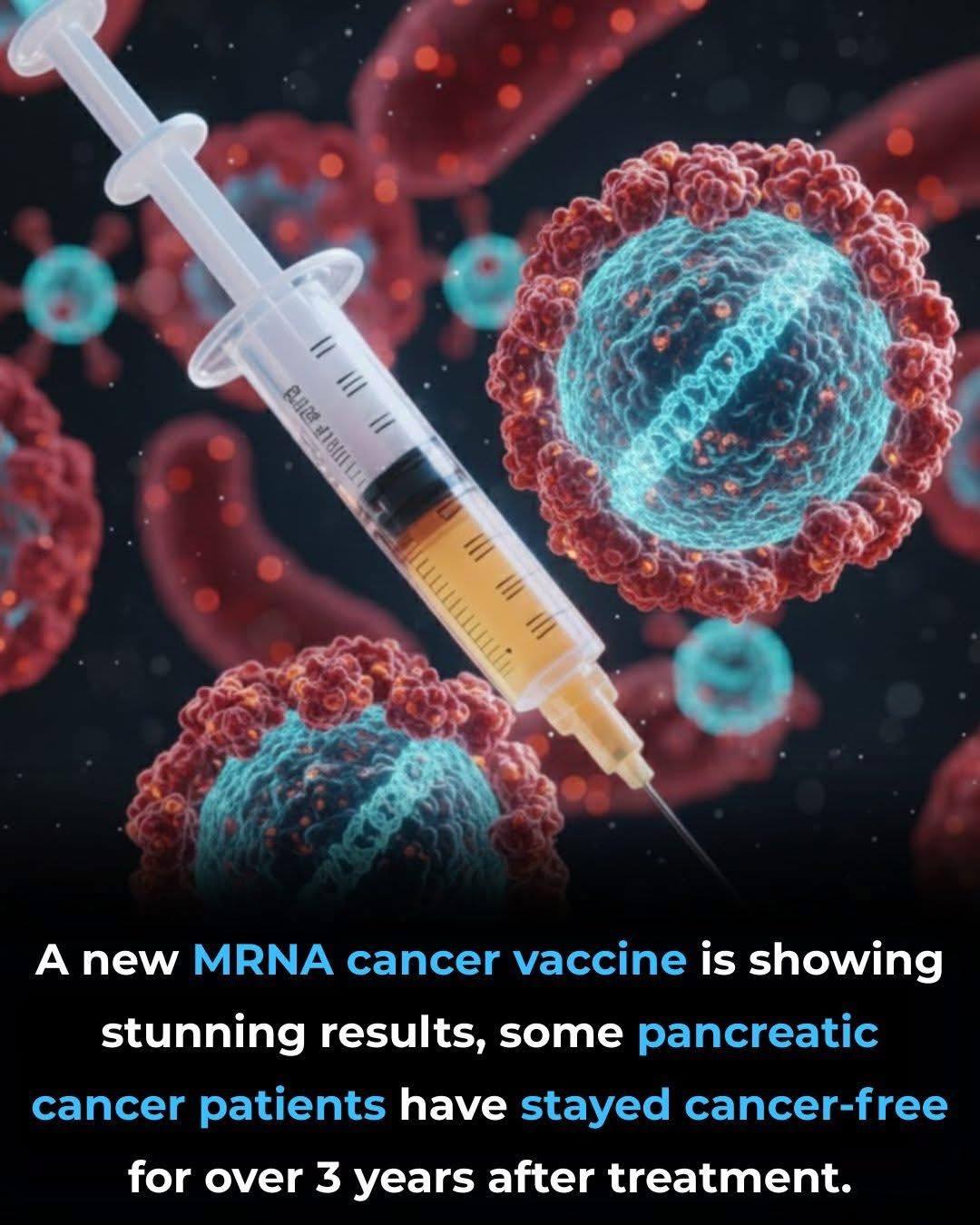
Promising New mRNA Vaccine Shows Potential to Combat Pancreatic Cancer
Pancreatic cancer remains among the deadliest forms of cancer worldwide. Its insidious nature, late diagnosis, and resistance to conventional therapies make it extremely challenging to treat. Scientists are racing to develop novel therapies that go beyond surgery, chemotherapy, and radiation — and a wave of research has now focused on mRNA‑based vaccines as a potential breakthrough. Recent studies, including early clinical trials and preclinical work in animal models, suggest that mRNA vaccines may be capable of training the immune system to recognize and attack pancreatic cancer cells more effectively, opening a new frontier in cancer immunotherapy.
Pancreatic ductal adenocarcinoma (PDAC) — the most common pancreatic cancer — has one of the lowest survival rates among major cancers. Even after surgical resection, which is only possible in a minority of patients, recurrence rates are extremely high, and long‑term survival is rare. Traditional treatments have limited impact on recurrence and metastasis, and immune checkpoint inhibitors, effective in some cancers, have largely failed to improve outcomes in PDAC due to the tumor’s hostile microenvironment. The need for innovative strategies is clear.
2. Why mRNA Vaccines for Cancer? A Technological Leap
Messenger RNA (mRNA) vaccines became widely known through COVID‑19 vaccines, which used mRNA to code for viral proteins and trigger immune responses. This same technology can be repurposed for cancer:
Cancer vaccines deliver mRNA encoding specific tumor antigens (proteins uniquely or predominantly expressed in cancer cells).
Once inside the body, cells use the mRNA to synthesize these antigens, which the immune system can then recognize as foreign, triggering a targeted attack by T cells.
Unlike traditional vaccines that aim to prevent infection, cancer vaccines are usually therapeutic — designed to treat an existing malignancy by stimulating the immune system against tumor cells.
mRNA vaccines are highly adaptable, can be personalized to a patient’s tumor mutations (neoantigens), and have the potential to induce long‑lasting immune memory. These features make them especially appealing for hard‑to‑treat cancers like PDAC.
3. The Autogene Cevumeran Vaccine: Personalized mRNA Therapy
3.1 How It Works
Autogene cevumeran is designed to train the patient’s immune system to recognize neoantigens — unique proteins that arise from mutations in the patient’s own tumor cells. After a patient undergoes tumor resection, scientists sequence the cancer’s genetic makeup and identify mutation‑derived neoantigens. Custom mRNA constructs encoding these neoantigens are then formulated into lipid nanoparticles and administered as a vaccine. This aims to stimulate T cells to seek and destroy residual cancer cells harboring the same mutations.
3.2 Phase 1 Trial: Early Human Evidence
In a Phase 1 clinical trial reported by the Memorial Sloan Kettering Cancer Center, early results were encouraging:
The vaccine was administered after surgery in patients with resected PDAC.
In about 50% of treated patients, the vaccine successfully activated immune cells — particularly cytotoxic T cells — that persisted for up to three years post‑vaccination.
These patients experienced delayed or reduced recurrence of their cancer compared with those whose immune systems did not mount a strong response.
3.3 Long‑Term Immune Response
Follow‑up data — including a three‑year assessment — revealed that in about 8 of 16 patients, vaccine‑induced cytotoxic T cells remained active up to three years after treatment. The persistence of these T cells was associated with longer recurrence‑free survival, suggesting that long‑lived immune memory may help keep the cancer at bay after curative surgery.
These results were significant because PDAC has traditionally been considered “immunologically cold” — meaning it usually fails to provoke an immune response. That these vaccines could overcome this barrier provides a meaningful proof of concept.
4. Other mRNA and Nanoparticle Vaccine Strategies
Beyond personalized mRNA vaccines, other strategies aim to simplify or broaden the approach.
4.1 Off‑the‑Shelf KRAS‑Targeted Vaccines
KRAS mutations are present in more than 90% of pancreatic cancers, making them highly attractive targets for cancer vaccines and other therapies. An experimental vaccine known as ELI‑002 2P targets these KRAS mutations using a multivalent antigen approach. In early phase trials:
Patients with pancreatic and colorectal cancers had immune activation against targeted KRAS mutations.
The vaccine appeared to stimulate tumor‑specific T cells capable of recognizing and attacking cancer cells bearing KRAS alterations.
This type of vaccine has potential advantages over personalized approaches because it doesn’t require custom sequencing for every patient, which could make it faster and more scalable.
4.2 Nanoparticle‑Mediated Liver Targeting
Researchers at UCLA have developed nanoparticle immune therapies that combine mRNA cancer vaccines with immune‑stimulating agents to reprogram the liver’s immune environment — which normally suppresses immunity — to fight pancreatic cancer metastasis:
These nanoparticles deliver mRNA encoding tumor antigens (e.g., mutated KRAS fragments) and a STING agonist that boosts immune activation within liver immune cells.
In mouse models, this approach not only slowed tumor growth but also generated immune memory that could protect against future cancer development.
While still preclinical, this strategy highlights how combining mRNA vaccination with cutting‑edge nanotechnology could enhance immune responses even in metastatic environments.
5. Underlying Science: How mRNA Vaccines Stimulate Immune Responses
Understanding how mRNA vaccines work against cancer requires a brief dive into immunology.
5.1 Neoantigens and T Cells
Neoantigens are abnormal proteins produced by cancer‑specific mutations.
Because they are novel to the immune system, neoantigens can serve as precise flags for T cells to identify cancer cells.
mRNA vaccines aim to deliver the instructions for these neoantigens to antigen‑presenting cells, which then activate CD8+ cytotoxic T cells to target and kill tumor cells.
5.2 Overcoming the Tumor Microenvironment
PDAC’s dense, fibrotic stroma and suppressive microenvironment make it resistant to many immunotherapies. Successful vaccine strategies must not only present antigens but also overcome these barriers:
Adjuvants — agents added to vaccines that boost immune activation — are often necessary to achieve robust T cell responses.
Pairing mRNA vaccines with checkpoint inhibitors or other immunomodulators may further enhance outcomes by preventing immune exhaustion.
This science underpins why the initial positive results with mRNA vaccines are so exciting: they show that even cold tumors like PDAC can be rendered more visible to the immune system with the right stimuli.
6. Clinical Context: Why These Findings Matter
6.1 PDAC’s Clinical Challenges
Pancreatic cancer has frustratingly low survival rates. Standard therapies — surgery, chemotherapy (e.g., gemcitabine, FOLFIRINOX), and radiation — often fail to prevent recurrence. Moreover, many patients are diagnosed at an advanced stage when surgery isn’t possible. In this context, even modest improvements are meaningful.
6.2 Survival and Recurrence Data
The Phase 1 vaccine data suggest that patients whose immune systems responded to autogene cevumeran had delayed recurrence compared with historical expectations for PDAC. While Phase 1 trials are small and preliminary, these findings support moving to larger Phase 2/3 studies to measure survival benefit more definitively.
6.3 mRNA Technology Beyond Pancreatic Cancer
Success in PDAC could open the door for mRNA vaccines against other cancers. Already, mRNA cancer vaccines targeting melanoma, lung, and colorectal cancers are under investigation. The principles learned in PDAC research — especially how to generate strong T cell responses in immunosuppressive environments — may inform broader cancer immunotherapy strategies.
7. Challenges and Limitations
Despite the promise, several hurdles remain before mRNA cancer vaccines become standard care.
7.1 Tumor Heterogeneity
PDAC tumors are genetically diverse within and between patients.
Personalized vaccines like autogene cevumeran require identifying the most relevant neoantigens for each patient, which can be complex and expensive.
7.2 Immune Evasion and Suppression
Even with effective vaccines, tumors may evolve mechanisms to evade immune attack or create a microenvironment that suppresses T cells. Combining vaccines with other therapies (e.g., checkpoint inhibitors) may be necessary to sustain responses.
7.3 Manufacturing and Access
Personalized mRNA vaccines require individualized manufacturing pipelines, which currently entails higher costs and logistical challenges. Off‑the‑shelf vaccines targeting common mutations may help address some of these barriers.
8. The Road Ahead: Future Research and Trials
Significant efforts are underway to build on these early successes.
Continue reading…
