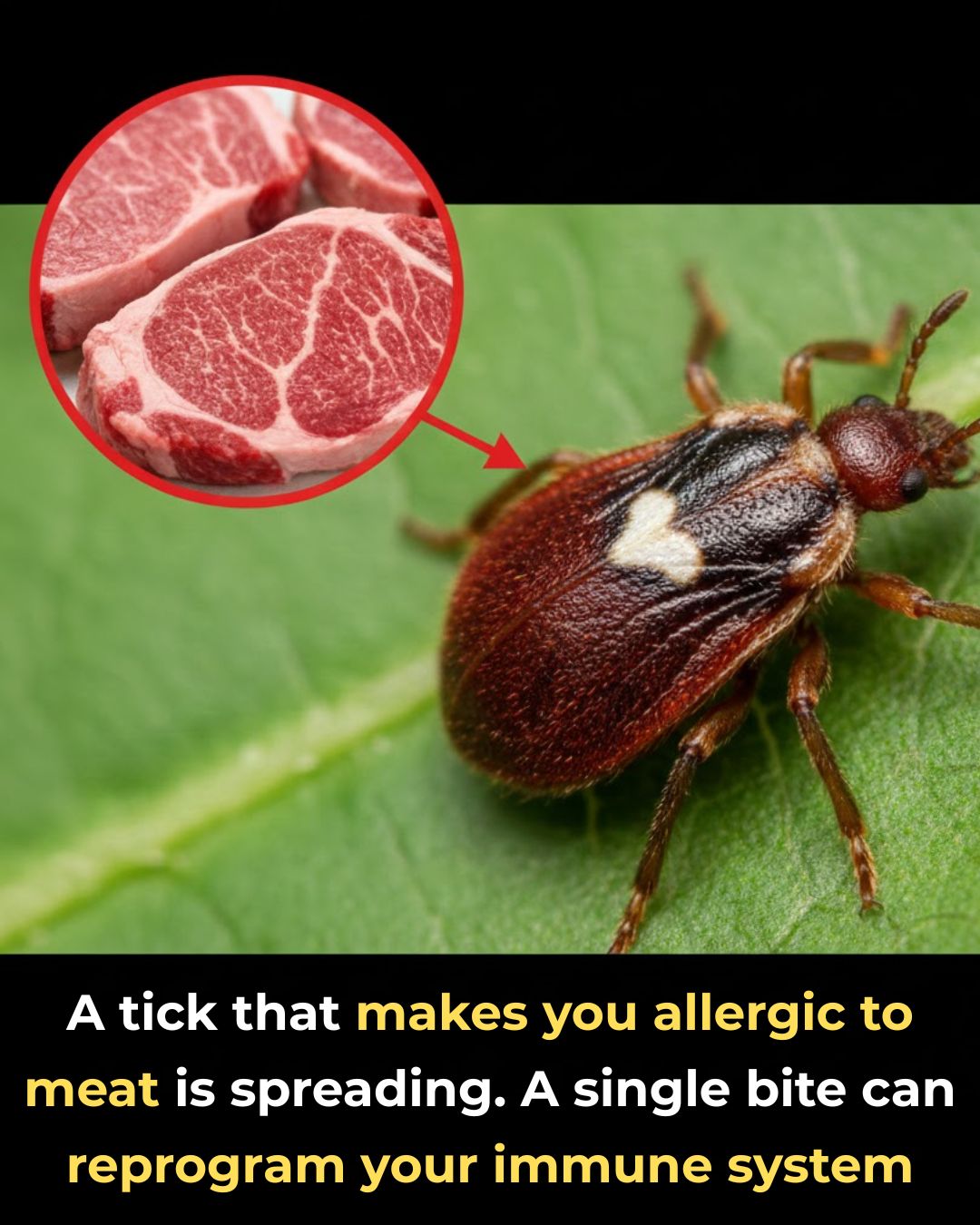
A Hidden Consequence of Tick Bites You Should Know About
When most people think about tick bites, they picture a small nuisance: an itchy red bump, a moment of discomfort, and then life goes on. Some are aware of Lyme disease or other tick-borne infections and know to watch for fever or rashes. But there’s a far less known—and deeply unsettling—consequence of tick bites that’s quietly affecting thousands of people worldwide.
Imagine eating a steak, a burger, or even a slice of pizza and hours later breaking out in hives, experiencing stomach cramps, or struggling to breathe. Now imagine being told this reaction wasn’t food poisoning or stress, but an allergy that didn’t exist in your body before a tick bite.
In this article, we’ll explore what Alpha-gal syndrome is, how tick bites can rewire your immune system, why symptoms are delayed and confusing, and what you can do to protect yourself. If you spend time outdoors—or simply eat meat—this is something you should know about.
Tick Bites: More Than Just a Minor Threat
Ticks are small, parasitic arachnids that feed on the blood of animals and humans. They thrive in grassy, wooded, and humid environments and are especially common in warmer months. While they don’t fly or jump, ticks are skilled at attaching themselves to passing hosts.
For years, the biggest concern with tick bites was their ability to transmit infectious diseases such as:
Continue reading…
