-
Lyme disease
-
Babesiosis
-
Ehrlichiosis
-
Anaplasmosis
These illnesses can cause serious complications if untreated. However, Alpha-gal syndrome is different—it’s not caused by bacteria or viruses, and it doesn’t show up immediately after a bite.
Instead, it quietly alters how your immune system responds to certain foods.
What Is Alpha-gal Syndrome?
Alpha-gal syndrome (AGS) is a type of food allergy that causes reactions to mammalian meat and products derived from mammals.
“Alpha-gal” is short for galactose-α-1,3-galactose, a sugar molecule found in most mammals, including:
-
Cows
-
Sheep
-
Deer
-
Goats
Humans, apes, and monkeys do not naturally have alpha-gal in their bodies. Because of this, the human immune system can recognize alpha-gal as foreign under certain conditions.
Alpha-gal syndrome occurs when the immune system begins producing IgE antibodies against this sugar, leading to allergic reactions when alpha-gal enters the body through food or other products.
How Can a Tick Bite Cause a Meat Allergy?
This is where the story becomes truly strange.
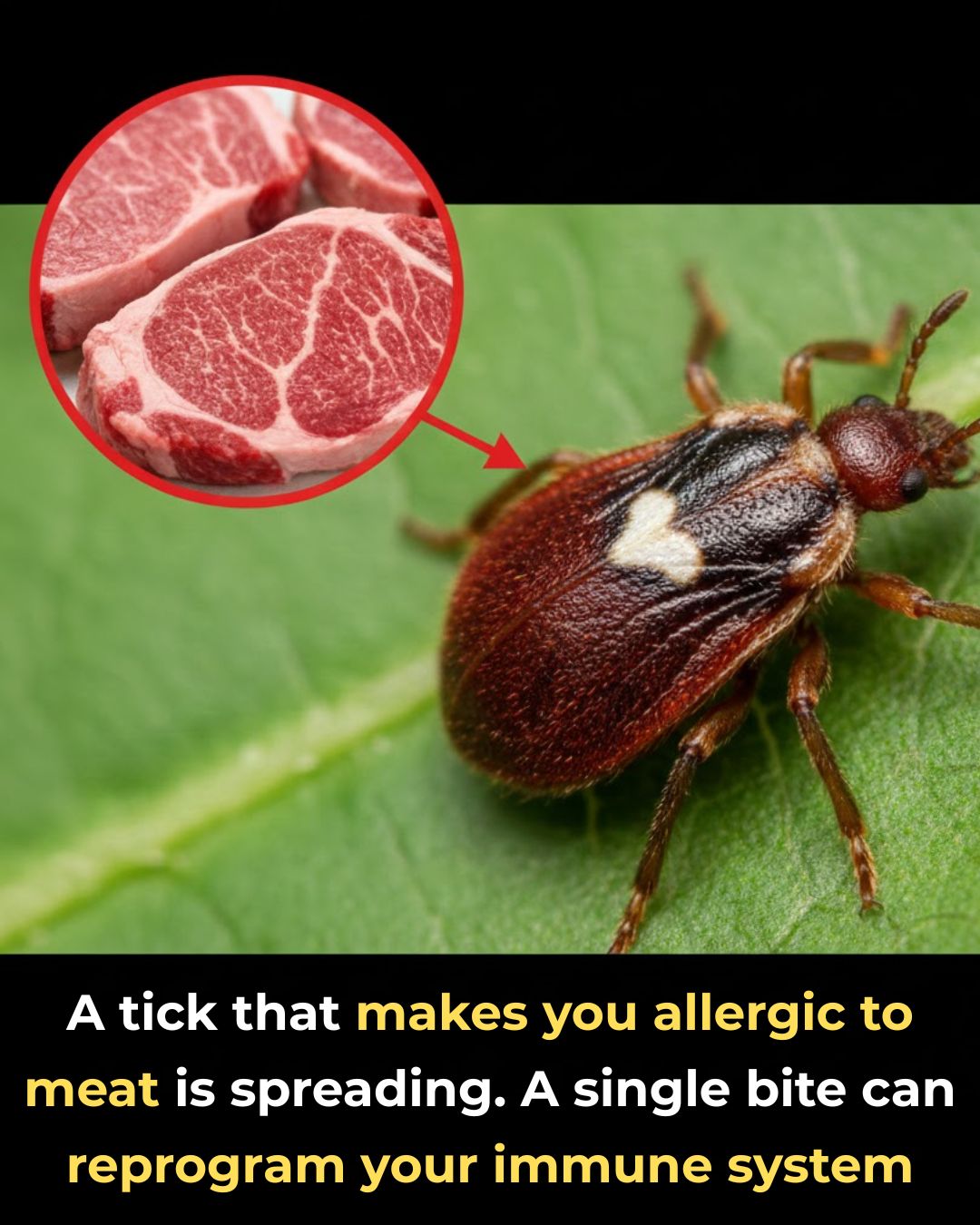
Certain tick species—most notably the Lone Star tick in the United States—carry alpha-gal molecules in their saliva. When a tick bites a human, it injects saliva into the skin to prevent blood clotting and avoid detection by the immune system.
Later, when the person eats mammalian meat containing alpha-gal, the immune system launches an allergic reaction.
In short:
-
Tick bites introduce alpha-gal into the bloodstream
-
The immune system becomes sensitized
-
Mammalian meat triggers an allergic response
This chain reaction can occur weeks or even months after the tick bite, which makes diagnosis difficult.
Why Alpha-gal Syndrome Is Often Missed
One of the most dangerous aspects of Alpha-gal syndrome is how easy it is to misdiagnose.
Delayed Symptoms
Most food allergies cause symptoms within minutes. Alpha-gal reactions are different—they typically occur 3 to 8 hours after eating.
Someone might eat dinner, go to bed, and wake up in the middle of the night with:
-
Hives
-
Intense itching
-
Abdominal pain
-
Vomiting
-
Diarrhea
-
Shortness of breath
-
Dizziness or fainting
Because the reaction is delayed, people often blame:
-
Food poisoning
-
Stress
-
Alcohol
-
Acid reflux
-
Anxiety
-
A stomach virus
As a result, many sufferers go undiagnosed for years.
Common Symptoms of Alpha-gal Syndrome
Symptoms can range from mild to life-threatening and may worsen over time.
Mild to Moderate Symptoms
-
Itchy skin or hives
-
Facial swelling
-
Nausea
-
Abdominal cramps
-
Diarrhea
-
Fatigue
Severe Symptoms
-
Difficulty breathing
-
Throat tightness
-
Rapid heartbeat
-
Drop in blood pressure
-
Loss of consciousness
-
Anaphylaxis
Anaphylaxis is a medical emergency and can be fatal without immediate treatment.
Foods and Products That Can Trigger Reactions
Alpha-gal is found in more places than most people expect.
Common Food Triggers
-
Beef
-
Pork
-
Lamb
-
Venison
-
Goat meat
-
Sausages and processed meats
-
Gelatin (found in candies, marshmallows, and desserts)
-
Dairy products (for some people)
Hidden Non-Food Sources
-
Medications containing gelatin
-
Certain vaccines
-
Medical implants derived from animal tissue
-
Cosmetics and personal care products
-
Capsules made from gelatin
This makes Alpha-gal syndrome a lifestyle-altering condition, not just a dietary inconvenience.
Who Is at Risk?
Alpha-gal syndrome has been reported worldwide, but risk is higher in areas with certain tick populations.
Risk Factors Include:
-
Living in or visiting tick-heavy regions
-
Spending time outdoors (hiking, hunting, camping, farming)
-
Multiple tick bites over time
-
Delayed tick removal
Children and adults can both develop the condition, and people with no history of allergies are often the most shocked by the diagnosis.
Diagnosing Alpha-gal Syndrome
Diagnosis requires a combination of medical history and testing.
Steps Often Include:
-
Detailed symptom timeline (especially delayed reactions)
-
Blood test measuring IgE antibodies to alpha-gal
-
Review of tick exposure history
Because awareness among healthcare providers is still growing, patients sometimes need to advocate for testing.
Is There a Cure?
Currently, there is no cure for Alpha-gal syndrome.
However, there is good news: in some cases, sensitivity may decrease over time if the person avoids further tick bites and strictly avoids alpha-gal-containing foods.
For others, the allergy can be long-term or even permanent.
Living With Alpha-gal Syndrome
Managing the condition requires constant vigilance.
Lifestyle Adjustments
-
Avoid mammalian meat and products
-
Read ingredient labels carefully
-
Inform healthcare providers of the allergy
-
Carry an epinephrine auto-injector
-
Educate family and friends
Many people with Alpha-gal syndrome report emotional challenges, including anxiety around eating and social events.
Preventing Tick Bites: Your Best Defense
Since Alpha-gal syndrome starts with a tick bite, prevention is critical.
Tick Prevention Tips
-
Wear long sleeves and pants outdoors
-
Use EPA-approved insect repellents
-
Treat clothing with permethrin
-
Avoid tall grass and dense brush
-
Shower after outdoor activities
-
Perform thorough tick checks
-
Remove ticks promptly with tweezers
Early removal reduces the risk of immune sensitization.
Why Awareness Matters
Alpha-gal syndrome is still underrecognized, but cases are increasing. Climate change, expanding tick habitats, and greater outdoor exposure are contributing to the rise.
Greater awareness can:
-
Speed diagnosis
-
Prevent severe reactions
-
Encourage better tick prevention
-
Save lives
Final Thoughts
Tick bites may seem harmless, but they can leave a lasting mark on your health in unexpected ways. Alpha-gal syndrome challenges our understanding of allergies and reminds us how interconnected our bodies are with the environment.
If you or someone you know experiences unexplained allergic reactions—especially hours after eating meat—don’t ignore it. What seems like a mystery could be the hidden consequence of a tick bite that happened long ago.
Sometimes, the smallest creatures can change our lives in the biggest ways.
