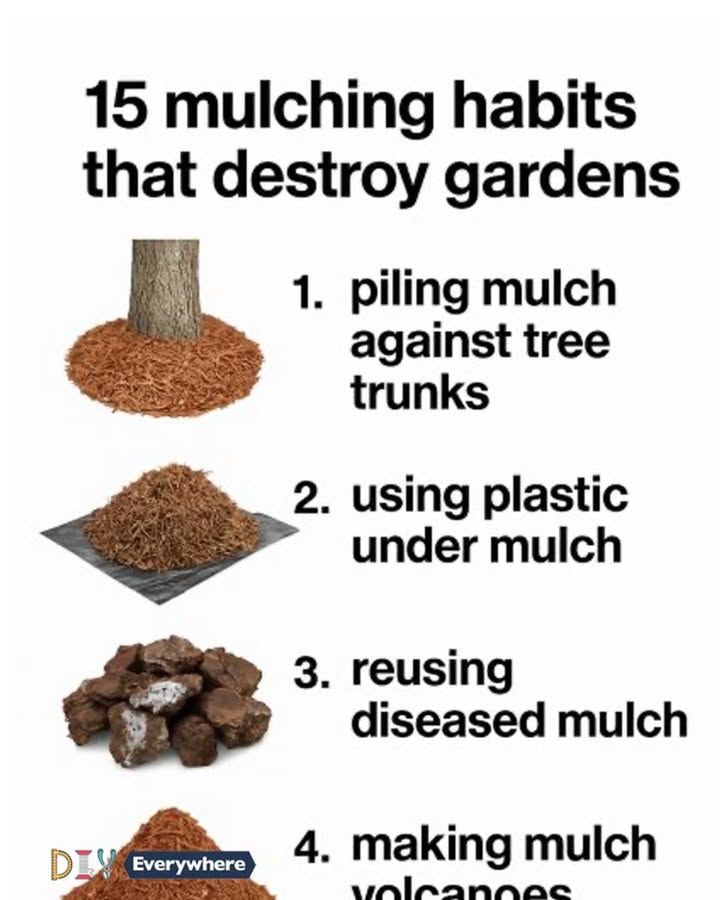
Mulching is a cornerstone of healthy gardening. It retains soil moisture, suppresses weeds, and improves soil structure. However, when done incorrectly, mulching can do more harm than good. Here are 15 common mulching mistakes that can sabotage your garden. 1. Applying Mulch Too Thickly Why it’s harmful: A thick mulch layer can suffocate roots by limiting air and water penetration. It also encourages fungal growth. Recommended practice: Keep mulch layers to 2–4 inches for most garden beds. Example: A 6-inch layer of bark around roses can lead to root rot and stunted growth. 2. Using the Wrong Type of Mulch Why it’s harmful: Not all mulches are suitable for every plant. For example, fresh wood chips can tie up nitrogen, while pine needles acidify soil. Recommended practice: Match mulch type to your plants’ needs. Compost, shredded leaves, straw, or cocoa hulls are versatile options. 3. Placing Mulch Directly Against Plant Stems Why it’s harmful: Mulch piled against stems or trunks causes rot, pest infestations, and disease. Recommended practice: Maintain a 2–3 inch gap between mulch and stems. 4. Using Mulch Containing Weed Seeds Why it’s harmful: Mulch made from unprocessed plant matter or hay can introduce weeds rather than suppress them. Recommended practice: Use weed-free mulch, such as processed bark or certified seed-free straw. 5. Ignoring Soil Moisture Before Mulching Why it’s harmful: Mulching dry soil can prevent water from penetrating, stressing plants. Conversely, wet soil covered with mulch can stay soggy and promote rot. Recommended practice: Water soil before mulching. Avoid mulching waterlogged areas. 6. Using Mulch That Is Too Fine Why it’s harmful: Finely shredded mulch, like sawdust, can compact and prevent water flow, suffocating roots. Recommended practice: Use coarse mulches for trees and shrubs; fine mulch is better for small annuals or vegetables. 7. Not Refreshing Mulch Regularly Why it’s harmful: Over time, mulch decomposes, loses effectiveness, and may even develop mold or pests. Recommended practice: Refresh mulch once or twice a year depending on type and climate. 8. Ignoring Mulch pH Effects Why it’s harmful: Certain mulches alter soil pH. For example, pine needles acidify soil, which may harm plants needing neutral or alkaline soil. Recommended practice: Check mulch effects on soil pH and choose accordingly. 9. Using Mulch That Attracts Pests Why it’s harmful: Mulch can harbor insects like slugs, snails, termites, and rodents. Recommended practice: Avoid mulch that holds excessive moisture near plant bases, and monitor for pests. 10. Over-Mulching Around Trees Why it’s harmful: Deep mulch around trees can prevent roots from getting oxygen, leading to shallow root growth and increased disease susceptibility. Recommended practice: Keep mulch 2–4 inches thick and extend it slightly beyond the tree drip line. 11. Using Mulch That Contains Chemicals Why it’s harmful: Some mulches, like dyed wood chips or treated pallets, contain harmful chemicals that leach into soil. Recommended practice: Use natural, untreated mulch. Avoid colored or chemically treated mulch near edibles. 12. Ignoring Seasonal Timing Why it’s harmful: Mulching at the wrong time can trap heat in summer or prevent soil warming in spring, delaying plant growth. Recommended practice: Apply mulch in late spring for summer cooling and late fall for winter protection. 13. Using Mulch to Cover Diseased Plants Why it’s harmful: Covering diseased plant debris with mulch can encourage disease spread. Recommended practice: Remove diseased material before mulching. 14. Not Considering Mulch Decomposition Rate Why it’s harmful: Fast-decomposing mulch can quickly turn into soil but may require frequent replacement, while slow-decomposing mulch may not enrich soil effectively. Recommended practice: Mix fast- and slow-decomposing mulches for balance. 15. Relying on Mulch as a Fertilizer Why it’s harmful: While some mulches add nutrients as they break down, most do not provide adequate fertilizer. Relying solely on mulch can lead to nutrient deficiencies. Recommended practice: Combine mulch with proper soil amendments or fertilizers. 💡 Conclusion Mulch can transform a garden when used correctly, but poor mulching practices are surprisingly common. Avoiding these 15 habits ensures healthier soil, stronger plants, and a thriving garden all year round. Remember, mulching is an art as much as a science—thickness, type, placement, and timing all matter.

Mulching is a cornerstone of healthy gardening. It retains soil moisture, suppresses weeds, and improves soil structure. However, when done incorrectly, mulching can do more harm than good. Here are 15 common mulching mistakes that can sabotage your garden.


1. Applying Mulch Too Thickly

  • Why it’s harmful: A thick mulch layer can suffocate roots by limiting air and water penetration. It also encourages fungal growth.

  • Recommended practice: Keep mulch layers to 2–4 inches for most garden beds.

  • Example: A 6-inch layer of bark around roses can lead to root rot and stunted growth.


2. Using the Wrong Type of Mulch

  • Why it’s harmful: Not all mulches are suitable for every plant. For example, fresh wood chips can tie up nitrogen, while pine needles acidify soil.

  • Recommended practice: Match mulch type to your plants’ needs. Compost, shredded leaves, straw, or cocoa hulls are versatile options.


3. Placing Mulch Directly Against Plant Stems

  • Why it’s harmful: Mulch piled against stems or trunks causes rot, pest infestations, and disease.

  • Recommended practice: Maintain a 2–3 inch gap between mulch and stems.


4. Using Mulch Containing Weed Seeds

  • Why it’s harmful: Mulch made from unprocessed plant matter or hay can introduce weeds rather than suppress them.

  • Recommended practice: Use weed-free mulch, such as processed bark or certified seed-free straw.


5. Ignoring Soil Moisture Before Mulching

  • Why it’s harmful: Mulching dry soil can prevent water from penetrating, stressing plants. Conversely, wet soil covered with mulch can stay soggy and promote rot.

  • Recommended practice: Water soil before mulching. Avoid mulching waterlogged areas.

  • Continue reading…

Leave a Comment