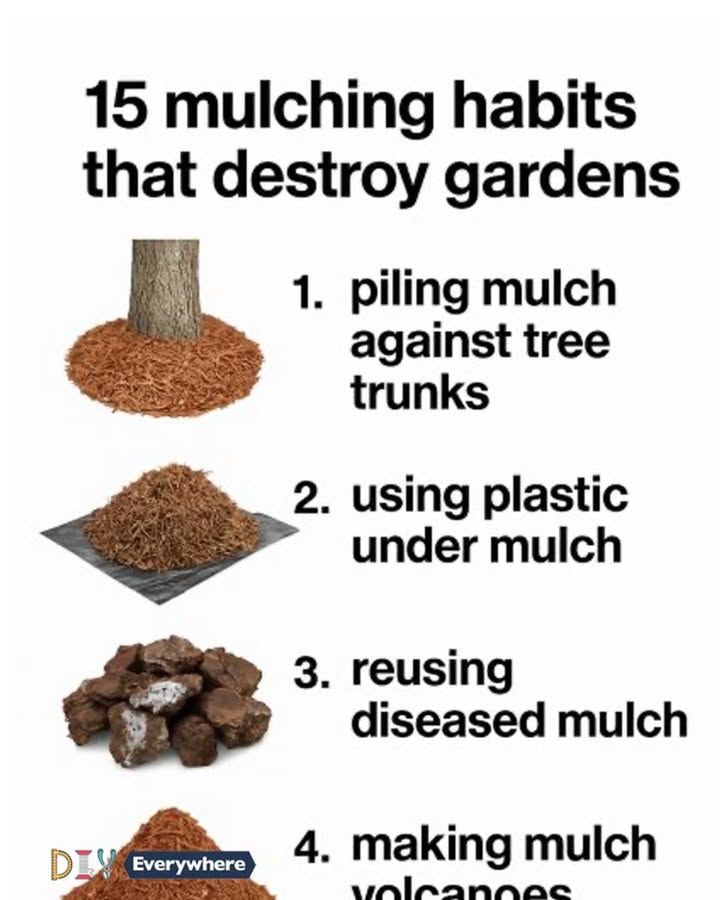
6. Using Mulch That Is Too Fine
-
Why it’s harmful: Finely shredded mulch, like sawdust, can compact and prevent water flow, suffocating roots.
-
Recommended practice: Use coarse mulches for trees and shrubs; fine mulch is better for small annuals or vegetables.
7. Not Refreshing Mulch Regularly
-
Recommended practice: Refresh mulch once or twice a year depending on type and climate.
8. Ignoring Mulch pH Effects
-
Why it’s harmful: Certain mulches alter soil pH. For example, pine needles acidify soil, which may harm plants needing neutral or alkaline soil.
-
Recommended practice: Check mulch effects on soil pH and choose accordingly.
9. Using Mulch That Attracts Pests
-
Why it’s harmful: Mulch can harbor insects like slugs, snails, termites, and rodents.
-
Recommended practice: Avoid mulch that holds excessive moisture near plant bases, and monitor for pests.
10. Over-Mulching Around Trees
-
Why it’s harmful: Deep mulch around trees can prevent roots from getting oxygen, leading to shallow root growth and increased disease susceptibility.
-
Recommended practice: Keep mulch 2–4 inches thick and extend it slightly beyond the tree drip line.
11. Using Mulch That Contains Chemicals
-
Why it’s harmful: Some mulches, like dyed wood chips or treated pallets, contain harmful chemicals that leach into soil.
12. Ignoring Seasonal Timing
-
Why it’s harmful: Mulching at the wrong time can trap heat in summer or prevent soil warming in spring, delaying plant growth.
-
Recommended practice: Apply mulch in late spring for summer cooling and late fall for winter protection.
13. Using Mulch to Cover Diseased Plants
-
Why it’s harmful: Covering diseased plant debris with mulch can encourage disease spread.
-
Recommended practice: Remove diseased material before mulching.
14. Not Considering Mulch Decomposition Rate
-
Why it’s harmful: Fast-decomposing mulch can quickly turn into soil but may require frequent replacement, while slow-decomposing mulch may not enrich soil effectively.
-
Recommended practice: Mix fast- and slow-decomposing mulches for balance.
15. Relying on Mulch as a Fertilizer
-
Why it’s harmful: While some mulches add nutrients as they break down, most do not provide adequate fertilizer. Relying solely on mulch can lead to nutrient deficiencies.
💡 Conclusion
Mulch can transform a garden when used correctly, but poor mulching practices are surprisingly common. Avoiding these 15 habits ensures healthier soil, stronger plants, and a thriving garden all year round. Remember, mulching is an art as much as a science—thickness, type, placement, and timing all matter.
