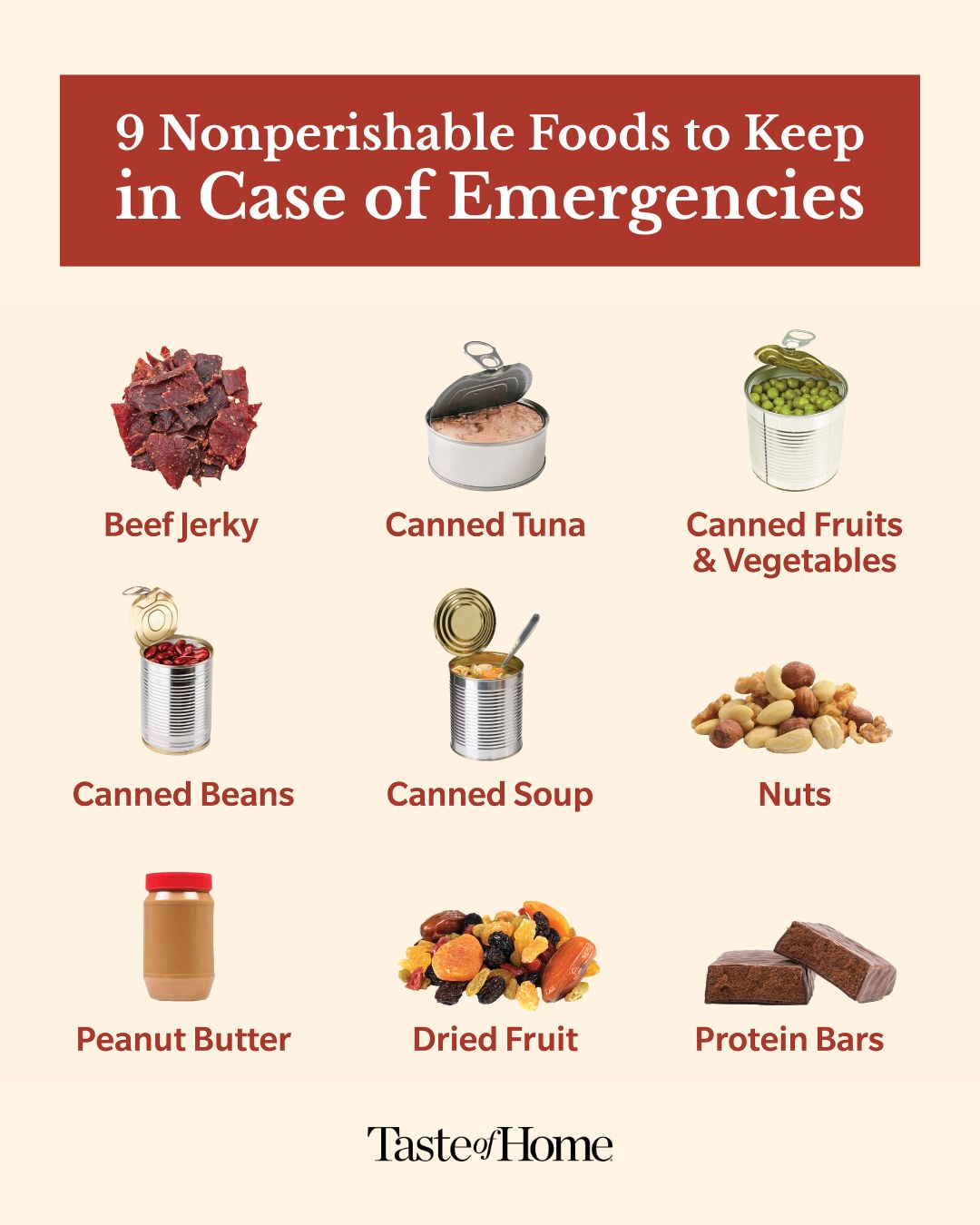
9 Nonperishable Foods to Keep in Case of Emergencies
Emergencies can strike unexpectedly—natural disasters, power outages, or personal crises can leave us without access to fresh food. One of the most important steps in emergency preparedness is maintaining a supply of nonperishable foods. These are foods that have a long shelf life, don’t require refrigeration, and can provide essential nutrients during times of need.
1. Canned Beans
Canned beans are a cornerstone of any emergency food supply. They’re packed with protein, fiber, and essential nutrients, making them an excellent option when fresh food isn’t available.
Benefits:
High in protein for vegetarians and omnivores alike.
Contain dietary fiber to support digestion.
Rich in minerals like iron, magnesium, and potassium.
Storage Tips:
Keep them in a cool, dry place.
Consider low-sodium options to reduce salt intake.
How to Use:
Eat straight from the can if water is limited.
Combine with rice, pasta, or canned vegetables for a hearty meal.
Shelf Life:
Canned beans can last 2–5 years, depending on storage conditions.
2. Rice
Rice is a versatile staple that has been feeding people for centuries. It’s lightweight, easy to store, and provides a reliable source of carbohydrates for energy.
Long shelf life when stored properly.
Gluten-free, suitable for most diets.
Provides sustained energy during emergencies.
Storage Tips:
Use airtight containers to prevent moisture and pests.
Store in a cool, dark place.
White rice lasts longer than brown rice due to lower oil content.
How to Use:
Boil with water for a quick meal.
Mix with canned beans or vegetables.
Shelf Life:
White rice: 4–5 years
Brown rice: 6–12 months
3. Canned Vegetables and Fruits
Fruits and vegetables are essential for vitamins and antioxidants, which help maintain your immune system. While fresh produce may spoil quickly, canned versions last for years without refrigeration.
Benefits:
Provide vitamin C, vitamin A, and potassium.
Easy to add to soups, stews, or pasta dishes.
Retain most nutrients despite processing.
Storage Tips:
Choose cans without dents or rust.
Store in a cool, dry pantry.
Rotate every 1–2 years for optimal quality.
How to Use:
Eat directly or heat before serving.
Combine with grains or protein sources for a balanced meal.
Shelf Life:
Canned vegetables and fruits can last 1–3 years, depending on type.
4. Peanut Butter
Peanut butter is a calorie-dense, nutrient-rich spread that doesn’t require refrigeration. It’s perfect for quick snacks or adding protein to meals.
Benefits:
High in protein and healthy fats.
Provides essential vitamins like vitamin E and magnesium.
Quick and easy to eat in emergencies.
Storage Tips:
Keep in a cool, dry pantry.
Opt for natural peanut butter with fewer additives.
Check expiration dates and rotate stock regularly.
How to Use:
Spread on crackers, rice cakes, or bread.
Mix into oatmeal or energy bars.
Shelf Life:
Unopened peanut butter: 1–2 years
Opened: 3–6 months (refrigeration extends life)
5. Pasta and Instant Noodles
Pasta and instant noodles are excellent sources of carbohydrates and can be stored for years. They’re lightweight, easy to cook, and versatile in emergency situations.
Benefits:
Provides quick, easily digestible energy.
Extremely long shelf life if stored properly.
Can be combined with canned vegetables, sauces, or proteins.
Storage Tips:
Keep in airtight containers or sealed packages.
Store away from heat and humidity.
Rotate stock every 1–2 years.
How to Use:
Boil and mix with canned sauce or vegetables.
Instant noodles can be eaten with just hot water.
Shelf Life:
Dry pasta: 2–3 years
Instant noodles: 1–2 years
6. Canned Meat and Fish
Protein is essential for muscle maintenance and energy, especially in emergencies. Canned meat and fish provide a convenient and long-lasting source of high-quality protein.
Benefits:
Rich in protein, iron, and omega-3 fatty acids (fish).
Ready to eat with minimal preparation.
Lightweight and portable for emergency kits.
Storage Tips:
Choose cans without dents or corrosion.
Store in a cool, dry location.
Rotate stock every 2–5 years, depending on type.
How to Use:
Mix into pasta, rice, or soups.
Eat directly with crackers or bread.
Shelf Life:
Canned meat: 2–5 years
Canned fish: 3–5 years
7. Oats and Other Whole Grains
Oats, quinoa, and other whole grains are versatile, nutritious staples. They’re rich in fiber, protein, and essential minerals.
Benefits:
Provide sustained energy.
Help with digestion and satiety.
Can be cooked or eaten as overnight grains.
Storage Tips:
Store in airtight containers to prevent moisture and pests.
Keep away from sunlight and heat.
Rotate every 1–2 years for best quality.
How to Use:
Cook as oatmeal or porridge.
Add to soups or baked goods for extra nutrition.
Shelf Life:
Rolled oats: 1–2 years
Quinoa: 2–3 years
8. Shelf-Stable Milk Alternatives
Shelf-stable milk, including powdered milk, UHT milk, or plant-based alternatives like soy or almond milk, ensures access to calcium and vitamin D even without refrigeration.
Benefits:
Essential for bone health.
Versatile for cooking, baking, or drinking.
Doesn’t require refrigeration until opened.
Storage Tips:
Store in a cool, dry place.
Avoid exposure to sunlight.
Check expiration dates and rotate stock regularly.
How to Use:
Drink directly or mix into cereals and oatmeal.
Use for cooking sauces or soups.
Shelf Life:
Powdered milk: 1–2 years
UHT milk: 6–12 months
9. Nuts and Seeds
Nuts and seeds, like almonds, walnuts, chia seeds, and sunflower seeds, are nutrient-dense powerhouses. They provide essential fats, protein, and minerals in a compact form.
Continue reading…
