Benefits:
High in healthy fats for sustained energy.
Can be eaten raw or added to meals.
Storage Tips:
Store in airtight containers to prevent rancidity.
Keep in a cool, dark pantry or refrigerate for extended life.
Consider vacuum-sealing for long-term storage.
How to Use:
Eat as a snack.
Sprinkle on oatmeal, yogurt, or salads.
Shelled nuts: 6 months at room temperature, 1 year refrigerated
Seeds: 1–2 years
Tips for Emergency Food Storage
Rotate regularly: Check expiration dates and replace items as needed.
Store in a cool, dry place: Avoid sunlight, heat, and humidity.
Use airtight containers: Prevent moisture, pests, and contamination.
Plan for dietary needs: Include items suitable for children, elderly, or those with allergies.
Conclusion
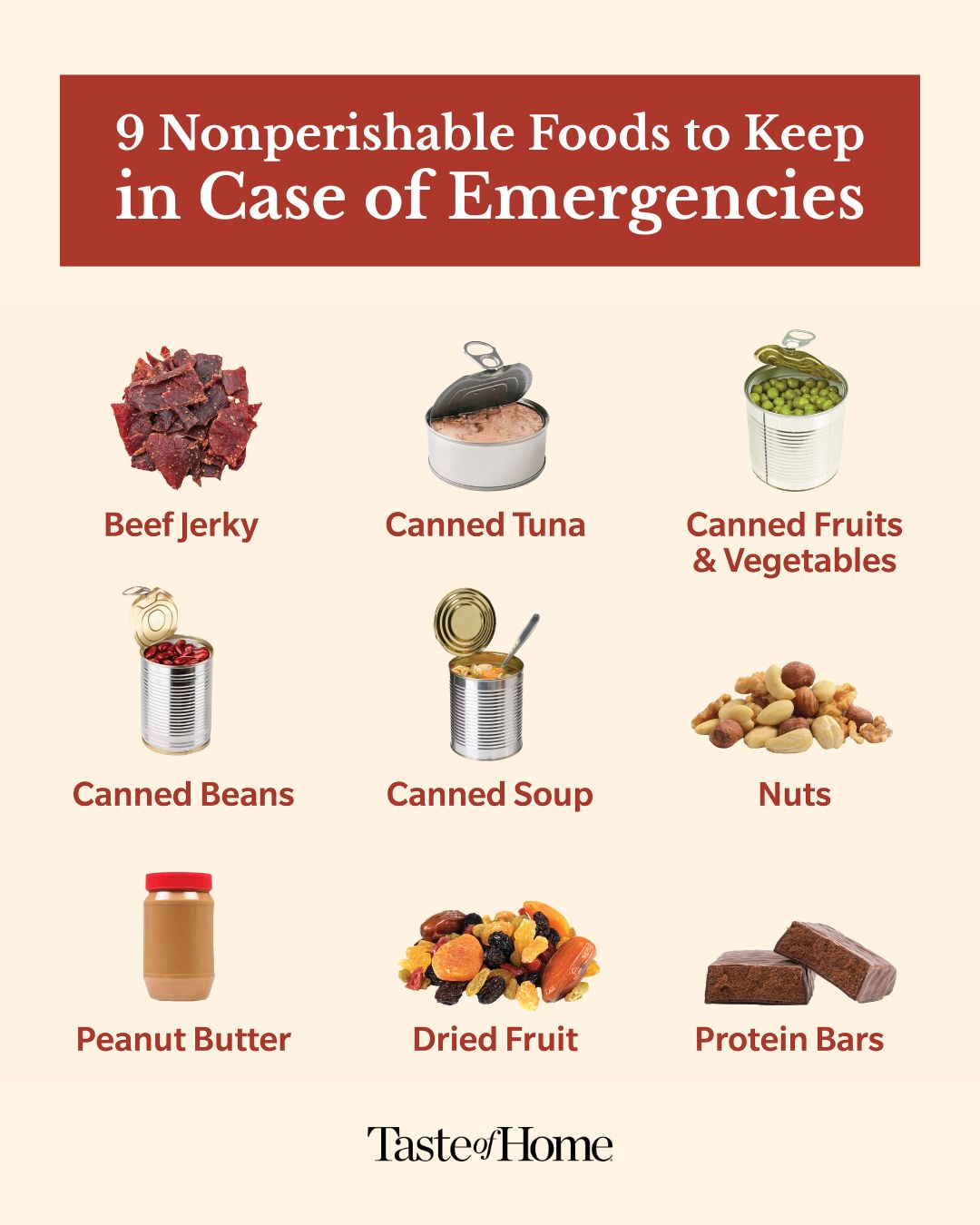
Building an emergency food supply doesn’t have to be overwhelming. By focusing on nonperishable, nutrient-dense foods, you can ensure your family stays nourished and safe during unexpected events. Canned beans, rice, peanut butter, pasta, and nuts are just a few staples that offer long shelf life, versatility, and essential nutrients.
The key is planning, rotating, and storing properly—small steps that can make a huge difference in a crisis. By keeping these nine nonperishable foods on hand, you’ll be better prepared for any emergency life throws your way.
