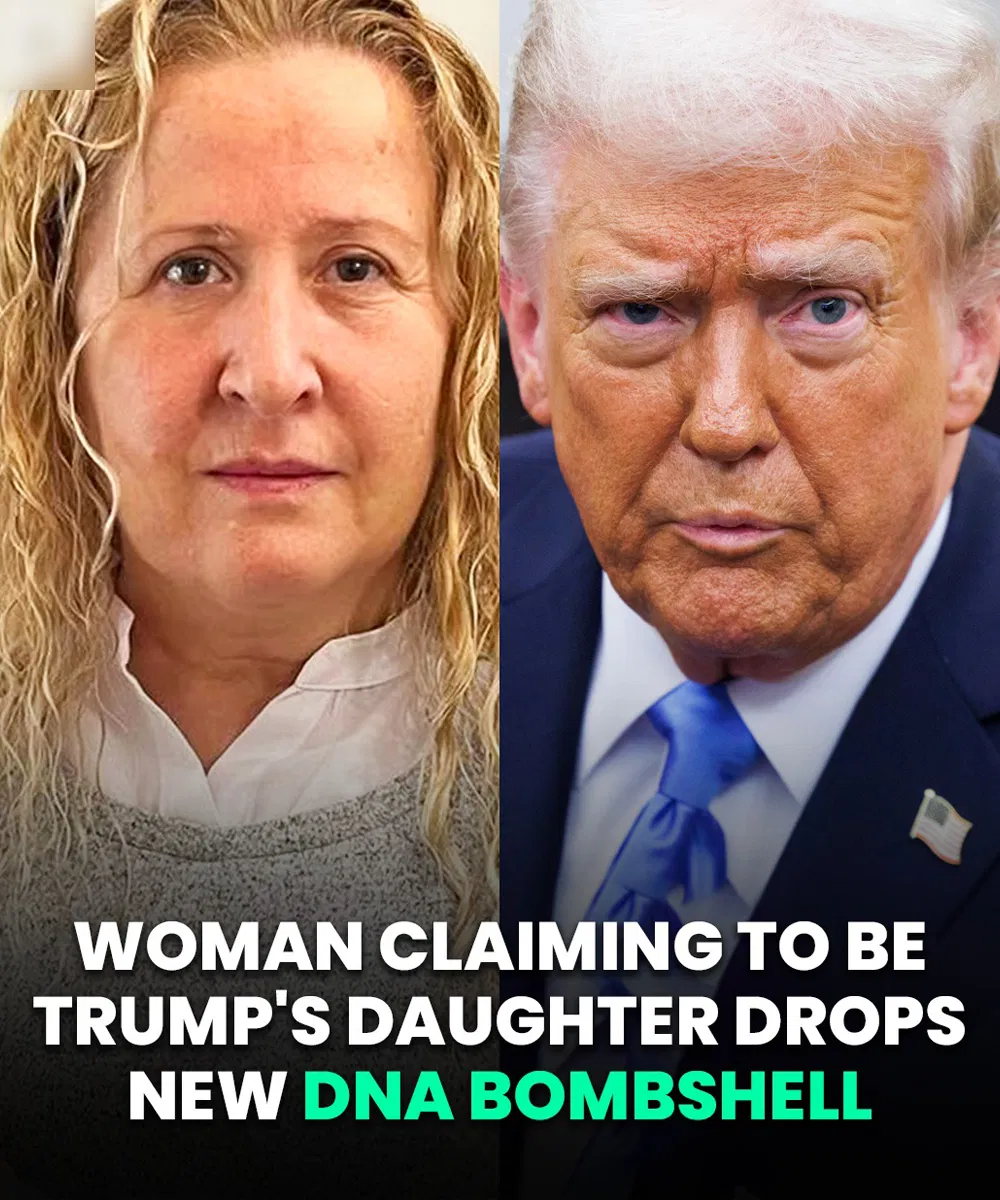
Turkish Woman Claims Donald Trump Is Her Father — Legal Battle for DNA Test Ignites Controversy
In late 2025 and early 2026, a Turkish woman’s extraordinary claims sparked a wave of international attention: she alleges that former U.S. President Donald J. Trump is her biological father and has sought legal action to obtain a DNA test to prove it. The case, originating in Ankara, has captured public imagination — in part because it touches on themes of identity, secrecy, international law, and the legacy of one of the most controversial figures in global politics.
Below is a full examination of the case, its basis, the legal proceedings to date, and what experts say about how such claims are evaluated.
Who Is the Claimant? — Background of Necla Özmen
The woman at the center of the story is Necla Özmen, a 55‑year‑old resident of Ankara, Turkey. According to her legal filing and statements reported in the Turkish press, Özmen was born in 1970 and officially registered at birth as the daughter of local Turks named Satı and Dursun Özmen.
However, Özmen’s claim hinges on a family story she says she learned years after her birth. She alleges that in 2017 — when she was already in her late 40s — her mother confessed that the family had not been her biological parents. Özmen says she was informed that her biological mother had delivered a stillborn child at a hospital, but that another woman — whom Özmen identifies only by the name “Sofia” and claims was a U.S. citizen — gave birth to a living baby, who was then given to the Özmen family to raise.
According to Özmen:
Her biological mother (Sofia) was purportedly involved in a relationship with Donald Trump, which resulted in the birth of a child.
That newborn child, allegedly herself, was then placed with the Özmen family after the biological mother’s supposed “stillborn” delivery.
Özmen says that she first learned this version of her birth history decades after it happened and now wants the truth established legally.
The Ankara Family Court Ruling — Claim Dismissed
In September 2025, Özmen filed a paternity lawsuit at the Ankara 27th Family Court requesting that Donald Trump be legally determined to be her father and that a DNA test be conducted to confirm it. She cited the account she says she was told by her mother along with other alleged irregularities in her birth registration and early life records.
However, in January 2026 the court issued a significant procedural decision: it dismissed her case, rejecting her request for a DNA test and determination of paternity. The ruling was rooted not in the biological merits of the claim but in the lack of verifiable evidence presented to support it.
Key Points of the Court’s Decision:
Hearsay Evidence: The court found that Özmen’s allegations were based on statements she said were told to her by family members — essentially hearsay — and lacked any substantiated documentation.
No Substantial Proof: There were no birth certificates, medical records, affidavits, photographs, or other materials linking Özmen’s early life to any American woman or proving contact between her alleged biological mother and Donald Trump.
No Adequate Factual Grounds: Turkish family courts require credible, objective grounds for claims that fundamentally challenge official civil status records. The court concluded that Özmen’s petition did not meet that threshold.
What Özmen Says Next — Appeal and Continued Efforts
Rather than abandoning her claim after the dismissal, Özmen has indicated that she will appeal the ruling and is attempting to pursue additional legal avenues, including in the United States. She has reportedly sent petitions to U.S. courts and even to the U.S. Embassy in Ankara asking for intervention or cooperation to obtain a DNA test from Donald Trump.
Özmen has publicly stated her motive is not to tarnish Trump’s reputation or generate controversy, but rather to “know the truth” about her parentage. However, legal experts note that the practical hurdles to pursuing such a case across borders — especially involving a high‑profile political figure — are formidable.
How Paternity Cases Work — Legal and Scientific Standards
To understand how unlikely it is that this claim will succeed without extraordinary evidence, it helps to look at how paternity claims and DNA evidence are usually handled in court.
Legal Requirements
In many jurisdictions, establishing paternity through the courts requires:
Burden of Proof: The claimant must present credible evidence that the alleged father may be biologically connected (e.g., documentation of contact, witnesses, or credible circumstantial support).
Court Order for DNA Testing: Family courts can order DNA tests if there’s a plausible factual basis for the claim. But courts rarely compel a DNA test of another adult without initial evidence supporting the need for it.
Biological Samples: A DNA test requires both participants’ samples. In a case against someone who does not consent — especially one residing internationally — a court may lack jurisdiction to enforce compliance.
Without such foundational proof, family courts are likely to dismiss claims at early stages. This is precisely what happened in Ankara. The Turkish court found insufficient factual grounds and declined to proceed.
Genetic Testing Basics
DNA testing for paternity typically involves:
Comparing genetic markers between an alleged parent and child.
Establishing a statistical probability of parentage (often >99.9% for a confirmed biological relationship).
Samples can be saliva, cheek swab, blood, or other tissue.
However, without both parties providing samples, a DNA test cannot be completed.
Donald Trump and Paternity — What the Public Knows
Donald Trump has five publicly acknowledged children:
Donald Jr.
Ivanka
Continue reading…
