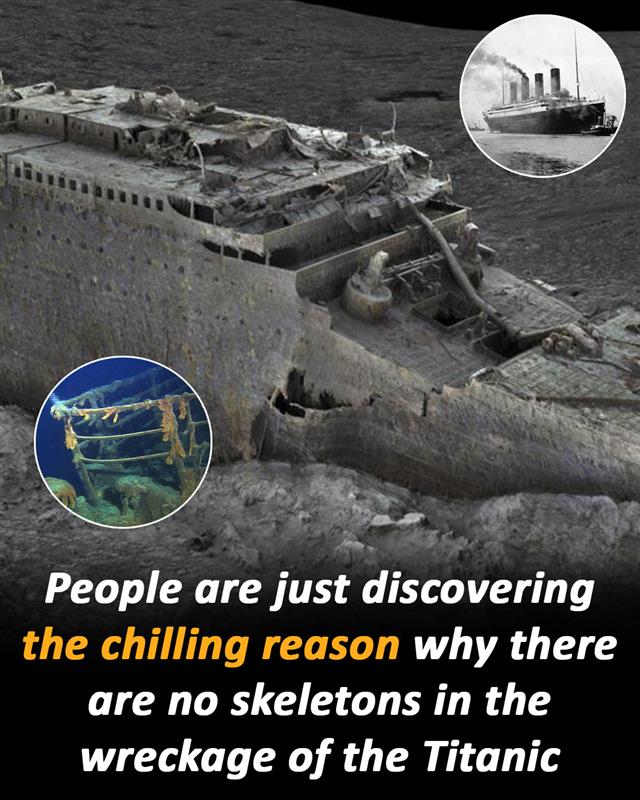
Why Bones Didn’t Survive Either
Even if scavengers removed the flesh, one might expect bones to remain. Yet skeletal remains are also absent.
The reason lies in ocean chemistry.
Calcium Dissolution Below the Carbonate Compensation Depth
In simple terms, the seawater at this depth is chemically hostile to bones.
Over time, skeletal remains slowly dissolve into the surrounding water. This process is gradual but relentless. Given the 73 years between the sinking and the wreck’s discovery—and now more than a century—it is entirely plausible that bones simply no longer exist.
The Mystery of the Shoes
If bodies and bones disappeared, why are shoes still there?
This is perhaps the most haunting aspect of the wreck.
Shoes, particularly leather ones from the early 20th century, are surprisingly durable in deep-sea environments. Leather can persist far longer than bone, especially when tanned using older methods that resist bacterial breakdown.
Additionally, shoes often remained weighted enough to stay on the seabed while bodies were consumed or decomposed. In some cases, the shoes likely remained in place after the feet inside them were removed by scavengers.
The result is a chilling tableau: pairs of shoes marking the spots where people once lay.
Explorers have described these scenes as some of the most emotionally powerful moments of their careers.
Bodies Inside the Ship: Why Weren’t They Preserved?
After all, deep-sea shipwrecks like ancient vessels or submarines have sometimes yielded skeletal remains.
The difference lies in water circulation and time.
The Titanic is not airtight. Water flows freely through broken hull plates, collapsed decks, and corroded passageways. This allowed marine organisms to access nearly every part of the ship.
Furthermore, the wreck has been steadily deteriorating since 1912. Iron-eating bacteria, known as Halomonas titanicae, have consumed large portions of the hull, creating rusticles—massive, icicle-like formations of rust that further destabilize the structure.
Any remains that might once have existed inside the ship were exposed long ago.
Why Some Shipwrecks Still Have Human Remains
People often point to other wrecks where human remains were found and ask why Titanic is different.
The answer lies in environmental variation.
-
Shallow water wrecks
-
Freshwater environments (like the Great Lakes)
-
Cold, oxygen-poor, sealed environments
In freshwater, bones do not dissolve the way they do in saltwater. In sealed compartments with limited scavenger access, remains can persist far longer.
The Titanic’s resting place offers none of those protections.
Debunking Conspiracy Theories
The absence of bodies has inspired numerous conspiracy theories, including claims that:
-
The wreck was staged or altered
-
Bodies were secretly removed
-
The ship is not actually the Titanic
There is no credible evidence supporting any of these claims. Every scientific explanation aligns with known oceanographic and biological processes. Multiple independent expeditions over decades have reached the same conclusions.
Sometimes, the truth is not hidden—it is simply uncomfortable.
Ethical Decisions: Why Explorers Avoid Human Remains
It’s also worth noting that modern expeditions treat the Titanic as a maritime grave site.
Even if human remains were discovered, they would likely not be disturbed or widely publicized. There is a strong ethical consensus among researchers to respect the dead and avoid sensationalism.
This respect may contribute to the perception that something is being hidden, when in reality, it is being honored.
A Different Kind of Presence
Although bodies are absent, human presence is everywhere.
A teacup resting on a shelf
A child’s shoe
A pocket watch frozen at the moment time stopped
Eyeglasses lying beside a bed frame
These artifacts speak more loudly than skeletons ever could.
They remind us that the Titanic was not just a ship—it was a temporary world filled with people who laughed, argued, dreamed, and trusted technology a little too much.
The Final Truth: Nature Leaves No Trace Forever
The ocean is not a museum. It is a living system that reclaims everything given enough time.
The absence of bodies at the Titanic wreck is not mysterious in a supernatural sense. It is the natural outcome of deep-sea conditions acting over more than a century.
And yet, emotionally, the mystery remains powerful.
Because when we look at the wreck, we expect to see the dead—and instead we see only what they left behind.
Perhaps that is more unsettling than any preserved remains could ever be.
Conclusion
The Titanic continues to captivate us not because of what is found, but because of what is missing.
The bodies are gone, returned to the sea that claimed them. What remains is steel, rust, silence—and questions about hubris, progress, and the fragile boundary between human ambition and nature’s indifference.
In the end, the absence of bodies is not a mystery that needs solving.
It is a reminder.
