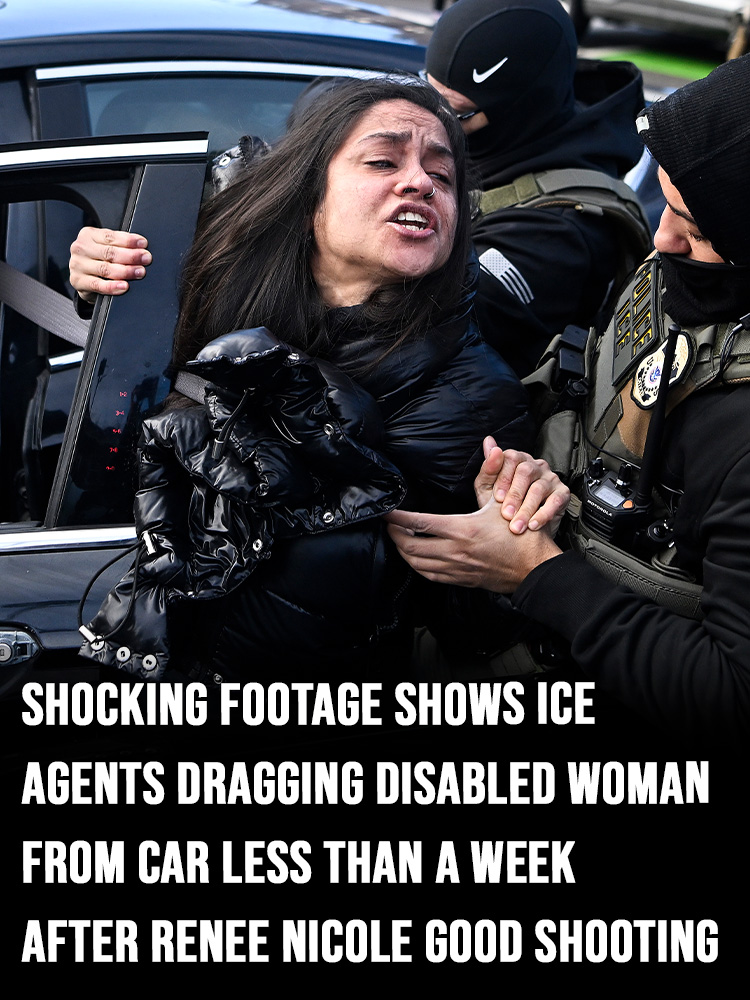
1. The Viral Footage: ICE Agents Dragging a Disabled Woman
In Minneapolis on January 13, 2026, video footage circulated widely showing federal immigration agents forcibly removing a woman from her car during an ICE operation. The incident happened just two blocks from where Renee Nicole Good had been fatally shot six days earlier.
Masked federal agents shouting commands at the woman at an intersection near south Minneapolis.
One agent breaking the passenger window and others cutting her seatbelt.
Agents dragging her from the car by her arms and legs and carrying her toward an ICE vehicle.
She repeatedly stated “I’m disabled” and that she was trying to go to a medical appointment.
Rahman’s attorney and civil rights advocates highlighted that her movement — either advancing the vehicle due to confusion or attempting to comply with orders — put her in a “terrible and confusing position” with limited safe options.
She later told reporters she felt lucky to be alive and was aware that the encounter could have ended in a shooting like Good’s, given the proximity and similarity of federal presence.
While ICE has not publicly released a detailed justification for using force in this specific arrest, the released video and Rahman’s own accounts have fueled intense debate about federal enforcement conduct.
2. Background: The Renee Nicole Good Shooting
According to multiple videos, eyewitness accounts, and official statements:
ICE agents were conducting a federal immigration operation when Good’s SUV became stationary in the street and surrounded by agents and protesters.
Agents approached her vehicle and demanded she exit.
When the vehicle began moving away — possibly to avoid escalation — an ICE agent standing in front of it fired multiple shots at close range, striking and killing Good.
Both federal officials and local witnesses disagree about whether her vehicle posed a lethal threat before the shooting.
Renee Good was a U.S. citizen and activist involved in community monitoring of ICE activity; her death ignited major protests, political controversy, and debate over federal use of force.
3. Federal and Local Reactions
Government Statements
This aligns with a broader narrative from DHS officials under the presidential administration citing law enforcement danger and national security justifications for aggressive enforcement operations.
Local and Public Outcry
Local officials, community groups, and civil liberties advocates have sharply disputed the government’s account:
Protesters in Minneapolis described federal operations as a “surge” of aggressive action.
Eyewitnesses and activists countered that video evidence contradicts official claims of imminent danger.
Public pressure has mounted for transparent investigations into both the shooting of Good and the dragging incident.
Activists have also sought to mobilize nationwide community observer groups to monitor ICE operations and provide independent documentation, highlighting concerns over accountability and civil rights protection.
4. Legal and Policy Implications
Use of Force by Federal Agents
Federal law governing immigration enforcement allows ICE agents to detain individuals suspected of violating immigration law, but the standards for deadly force — especially against U.S. citizens — are highly restrictive. National policy generally requires a clear and immediate threat of serious harm before lethal force can be justified.
Legal experts and civil rights attorneys argue that:
Shooting a driver as she attempts to leave may not meet established thresholds for imminent threat.
Dragging a disabled person from a car raises questions about reasonable force and accommodations under disability laws.
Investigations and Oversight
Multiple calls from local leaders — including from Minneapolis officials — urge independent investigations, including:
Possible involvement of the FBI or DOJ Civil Rights Division.
Scrutiny over DHS supervisory omissions.
Examination of training, command decisions, and internal accountability.
There is no confirmed federal indictment or discipline announced yet for either the shooting or the dragging incident.
5. Broader Context: Federal Enforcement Strategy
These incidents are part of a larger spike in immigration enforcement actions in Minneapolis and other U.S. cities. Advocates argue that:
Heavy federal enforcement presence increases tension and conflict.
Lack of clear communication with local authorities can escalate situations.
Use-of-force policies may be inconsistently applied.
An investigative report found that in multiple similar incidents nationwide, government explanations have diverged from video evidence, raising concerns about transparency and public trust.
Continue reading…
