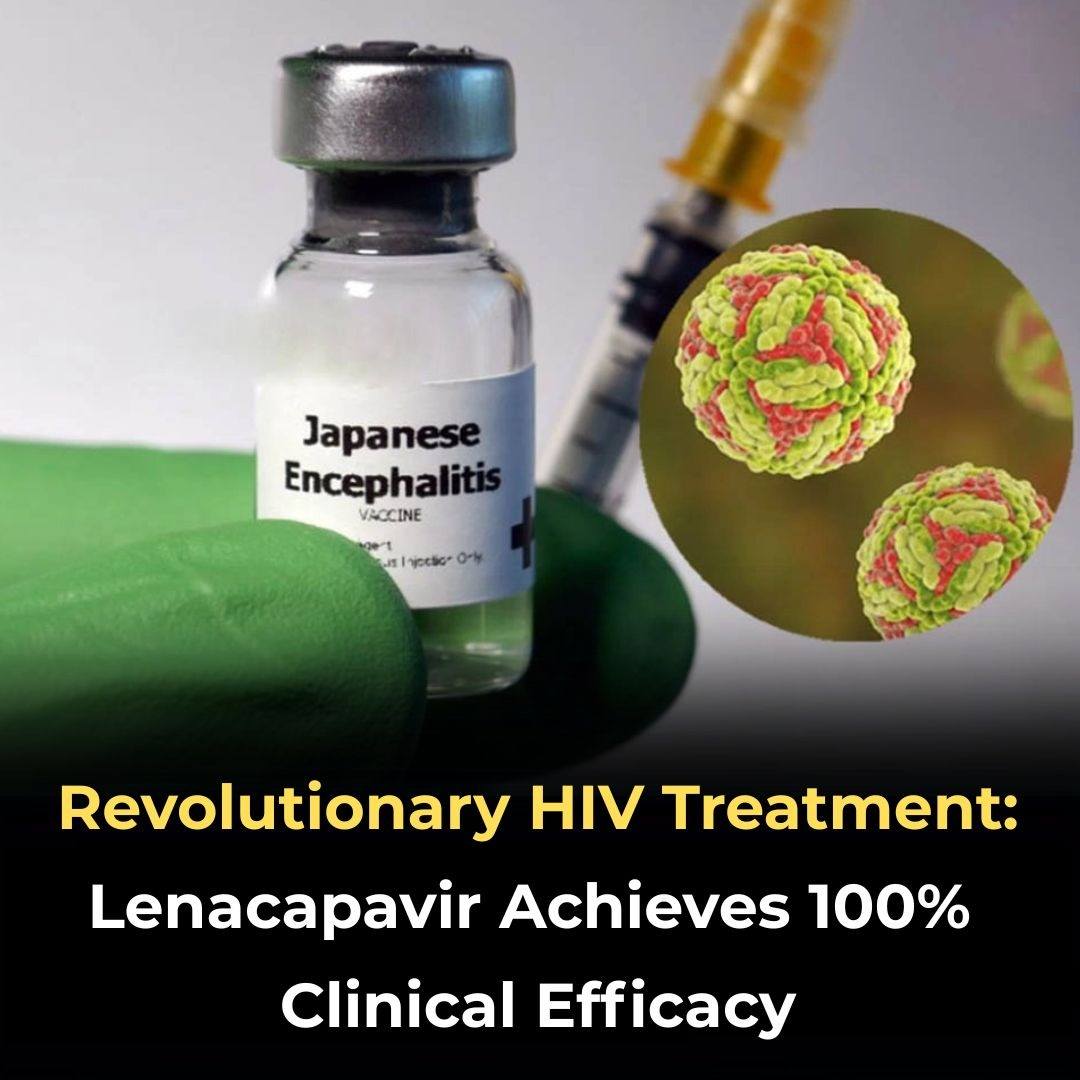
Lenacapavir Achieves Near‑100% Clinical Efficacy
Introduction
The global fight against HIV/AIDS has seen remarkable progress over the past four decades — from the early days of limited treatment options and high mortality, to today’s arsenal of antiretroviral therapies (ART) and preventive measures such as oral pre‑exposure prophylaxis (PrEP). Yet the battle is not over. Adherence challenges, stigma, and inequities in access continue to fuel new infections and prevent the goal of ending HIV transmission.
Enter lenacapavir — a groundbreaking therapy that is transforming the landscape of HIV prevention and treatment. This twice‑yearly injectable offers unprecedented protection as a preventive medicine and shows promise in evolving long‑acting treatment paradigms. Emerging data suggest it can reduce HIV acquisition by up to 100% in certain trial populations and nearly 99.9% in broader groups — a milestone hailed by experts as one of the most significant advances in the fight against HIV/AIDS in years.
Lenacapavir is a first‑in‑class capsid inhibitor — a novel category of antiretroviral agent that targets the HIV capsid protein, which encases the viral RNA genome. By interfering with multiple stages of the viral life cycle, including capsid assembly and disassembly, lenacapavir disrupts HIV replication more comprehensively than many conventional therapies that target only one replication step.
Unlike many antiretroviral drugs that must be taken daily, lenacapavir’s pharmacological properties allow subcutaneous injections just twice per year. This long‑acting format offers a major advantage for adherence and convenience, reducing barriers that have historically undermined the effectiveness of HIV prevention and treatment strategies.
2. Names and Approvals
Lenacapavir is marketed under several brand names, including Yeztugo® for pre‑exposure prophylaxis (PrEP). It has gained regulatory approvals for different uses:
Approved by the U.S. Food and Drug Administration (FDA) as a twice‑yearly PrEP option in 2025 based on compelling efficacy and safety data from Phase 3 trials.
It also has approval in other regions and is under evaluation in global regulatory jurisdictions with submissions underway to expand its reach.
Clinical Trial Evidence: Near‑100% Efficacy
The transformational promise of lenacapavir comes from robust clinical trial evidence — particularly from the PURPOSE Phase 3 trial program, which included two pivotal studies: PURPOSE 1 and PURPOSE 2.
The Phase 3 PURPOSE 1 trial evaluated twice‑yearly lenacapavir injections as PrEP in cisgender women and adolescent girls — a group disproportionately affected by HIV, especially in sub‑Saharan Africa. In an interim analysis:
0 of 2,134 participants in the lenacapavir group acquired HIV during the randomized phase.
This result corresponds to 100% efficacy in preventing HIV infection in this cohort.
The independent Data Monitoring Committee (DMC) recommended stopping the blind phase early due to the overwhelming efficacy.
This zero‑infection outcome is unprecedented in HIV PrEP research and represents a major leap forward from existing daily oral options, which can show high effectiveness only if adherence is optimal.
2. PURPOSE 2: Global, Diverse Population
The Phase 3 PURPOSE 2 trial expanded the research to a diverse, geographically broad population, including cisgender men, transgender men, transgender women, and gender‑diverse individuals in countries across South America, Africa, Asia, and North America. Here:
The overall efficacy showed a 96% reduction in HIV acquisition compared to background HIV incidence.
For comparison, twice‑yearly lenacapavir was also shown to be superior to once‑daily oral Truvada®, the long‑established oral PrEP standard.
These results underscore that lenacapavir’s protective effects extend beyond single demographic groups to diverse populations worldwide — without major safety concerns emerging in the trials.
How Does Lenacapavir Compare to Existing HIV Prevention?
Historically, HIV prevention has relied heavily on daily oral PrEP — typically tenofovir‑based regimens such as Truvada® or Descovy®. While clinical trials often showed oral PrEP to be highly effective when taken consistently, real‑world adherence issues significantly reduced its protective impact.
In contrast:
Lenacapavir’s twice‑yearly injections remove the requirement for daily pill adherence.
Clinical outcomes show higher retention of efficacy because the dosing schedule matches better with patients’ lifestyles and health system capacities.
This format could dramatically reduce barriers for populations with limited access to daily medical care or challenges in taking pills consistently.
In both PURPOSE trials, lenacapavir was not only highly effective but also generally well‑tolerated — a critical factor for long‑term prevention strategies.
Mechanism of Action: Why It Works So Well
Lenacapavir’s strength lies in its mechanistic innovation:
Capsid Inhibition: HIV particles are wrapped in a protein shell called the capsid. Lenacapavir binds to this capsid, interfering with its ability to assemble and disassemble — processes that are essential for the virus to infect cells and replicate.
Multistage Disruption: Unlike drugs that act on a single phase of HIV’s life cycle, lenacapavir impairs multiple stages — providing a broader blockade against viral propagation.
Long‑Acting Pharmacokinetics: Its chemical structure allows slow release into the body, sustaining therapeutic drug levels for months after a single injection. This long duration underpins the six‑month dosing schedule, which is a major advance in HIV care.
Regulatory and Public Health Impact
Lenacapavir’s clinical success has translated quickly into regulatory approvals and public health recommendations:
In June 2025, the FDA approved lenacapavir (Yeztugo®) for HIV PrEP, marking it as the first and only twice‑yearly PrEP option in the United States.
The Centers for Disease Control and Prevention (CDC) and other authorities are updating clinical guidelines to include lenacapavir as a recommended PrEP option, especially for individuals who would benefit from infrequent dosing.
The availability of long‑acting PrEP has major implications:
Adherence Gains: By eliminating the need for daily action, lenacapavir could substantially boost adherence levels — a key determinant of preventive effectiveness.
Equity in Access: Twice‑yearly dosing may be easier to integrate into health systems in low‑ and middle‑income countries, where frequent clinic visits are challenging.
Reduced Transmission: Higher coverage with effective PrEP can significantly reduce HIV incidence at the community level.
Real‑World Significance and Expert Reactions
Leading experts have acknowledged lenacapavir’s potential to reshape HIV prevention:
The independent Data Monitoring Committees’ decisions to halt blinded phases early — due to overwhelming efficacy — reflect strong confidence in the data.
Researchers have highlighted the promise of long‑acting antiretrovirals as tools to overcome longstanding barriers to PrEP uptake, particularly among marginalized groups.
Science — the peer‑reviewed journal — named lenacapavir a “Breakthrough of the Year”, underscoring its scientific and public health significance.
In testimonies from major conferences (such as IAS 2025), new data showed efficacy and tolerability across broad populations including pregnant women, adolescents, and people with concurrent medical conditions — groups often excluded from traditional trials.
Limitations and Considerations
While lenacapavir’s efficacy data are remarkable, several considerations remain:
Treatment vs. Prevention: The near‑100% efficacy results pertain to pre‑exposure prophylaxis (PrEP) in HIV‑negative individuals. Lenacapavir is also used as part of combination therapy for existing HIV infection, but the performance and guidelines differ from PrEP usage.
Long‑Term Outcomes: Although intermediate data are strong, continued follow‑up is necessary to confirm durability, real‑world effectiveness, and rare adverse profiles.
Continue reading…
