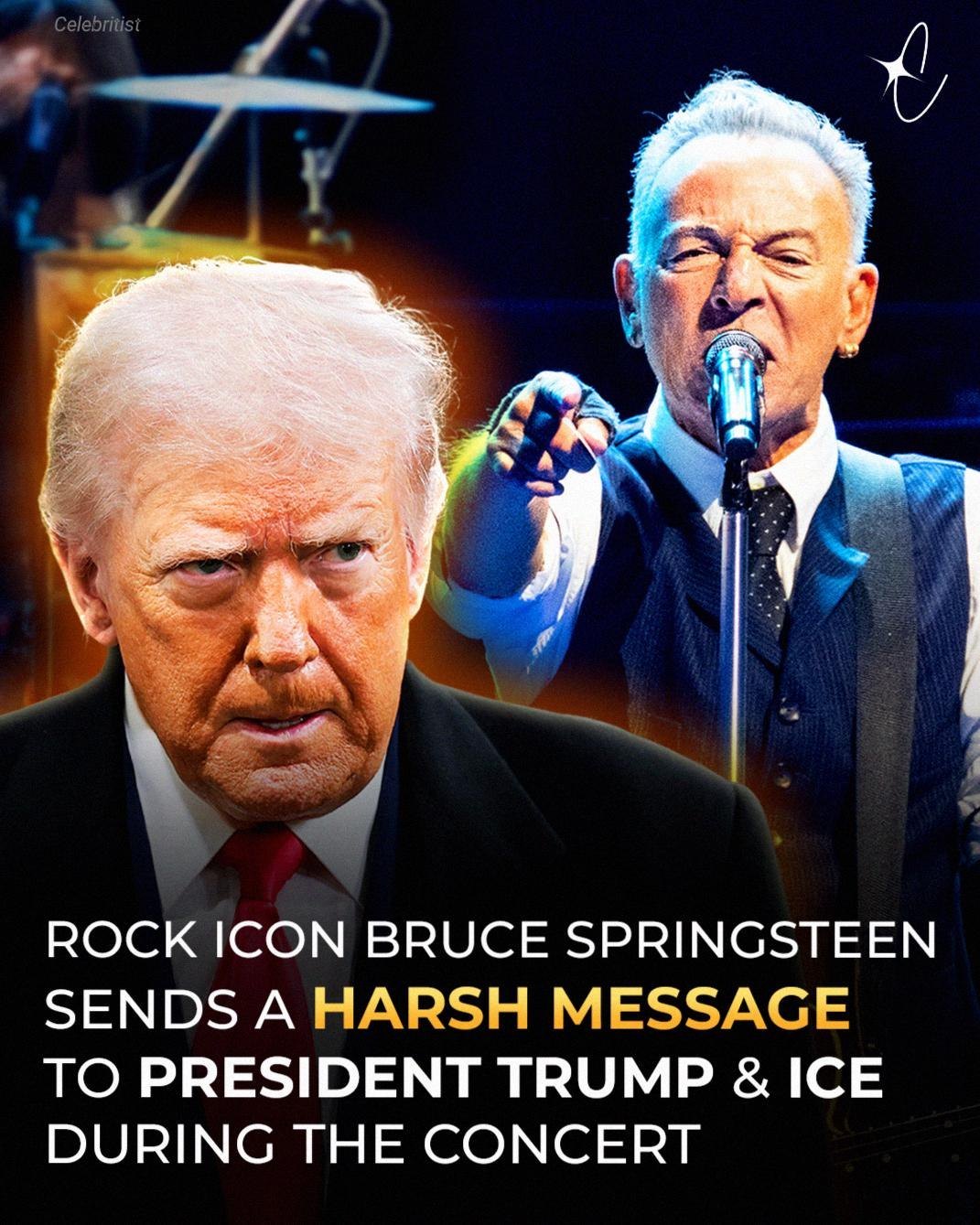
Introduction — A Rock Legend Takes the Stage with a Message
On January 17, 2026, music icon Bruce Springsteen made an unexpected appearance at the Light of Day Winterfest benefit concert in Red Bank, New Jersey. Widely celebrated as “The Boss,” Springsteen isn’t a stranger to civic engagement or social commentary. But this time his words drew national attention — not just for political expression, but because they directly confronted federal immigration enforcement, especially ICE (Immigration and Customs Enforcement).
Context — What Happened in Minneapolis
Before exploring Springsteen’s remarks in depth, it’s crucial to understand the incident that served as their catalyst.
In Minneapolis, Minnesota, on January 7, 2026, a 37‑year‑old woman named Renee Nicole Good was shot and killed during a confrontation with an ICE agent. According to reports, the agent fired multiple shots into Good’s vehicle. The agent claimed self‑defense; witnesses and critics questioned that narrative. Good was described as a legal observer documenting enforcement activity.
The incident quickly became a flashpoint in debates over immigration enforcement, federal authority, use of force, and the rights of citizens and immigrants. Minneapolis Mayor Jacob Frey publicly demanded that ICE “get the f— out of Minneapolis,” words that Springsteen would later echo at the New Jersey show.
Springsteen’s Remarks — What He Said on Stage
Springsteen’s remarks combined political critique, artistic context, and personal conviction. Here’s a breakdown of what he said:
1. Framing the Moment
Springsteen opened by reflecting on the song he was about to perform:
This framed his message — not as a rant, but as an expression of hope and concern, anchored in American ideals like democracy, liberty, and justice.
2. Critique of Federal Actions
He then spoke directly about the national situation, linking ongoing ICE activity to larger questions about democracy and civil rights:
“Now, right now, we are living through incredibly critical times. The United States, the ideals and the values for which it stood for the past 250 years are being tested as it has never been in modern times.”
He continued by criticizing “heavily armed masked federal troops invading American cities … using Gestapo tactics against our fellow citizens.”
This language drew especially strong attention because of its historical resonance and harsh tone — “Gestapo” traditionally refers to Nazi Germany’s secret police. While political rhetoric often uses strong language, this comparison underscored Springsteen’s alarm over what he perceives as abuses of power.
3. Echoing Local Leaders
“If you believe in the power of the law … if you stand against … then send a message to this President, as the mayor of that city has said: ICE should get the f— out of Minneapolis.”
This direct echoing of local political demands tied his national critique to a specific community’s response to trauma and loss.
4. Dedication to Renee Good
Before performing his 1978 song “The Promised Land,” Springsteen dedicated it to Renee Good — described in his remarks as an “American citizen” and a mother of three. By doing so, he personalized the abstract debate about policy, grounding it in the human cost of enforcement decisions.
The Lyrics and Their Meaning
Choosing to perform “The Promised Land” in that moment was symbolic. The song, from his 1978 album Darkness on the Edge of Town, has often been interpreted as a hymn to resilience, hope, and the pursuit of a better life. Lines like:
“I’ve done my best to live the right way / I get up every morning and go to work each day…”
underscore themes of dignity and struggle — elements central to Springsteen’s political messaging in this context.
By aligning this track with his critique of enforcement tactics, Springsteen invoked American dreams of freedom and equitable treatment, implicitly contrasting them with what he framed as heavy‑handed policing.
Reactions — Support, Criticism, and Political Backlash
Audience Reaction
Video and crowd accounts from the performance showed applause and support from many in attendance, indicating resonance among Springsteen’s fans. For many, especially in liberal circles, his message reflected concerns about civil liberties and federal overreach.
Continue reading…
