Hydrangeas That Bloom on New Wood
-
Panicle hydrangea
These can be pruned in late winter or early spring.
When in Doubt
Don’t prune at all.
A messy hydrangea is better than a flowerless one.
Cold Damage vs. Disease: Don’t Confuse the Two
Dead-looking stems in spring often trigger panic. But winter damage is extremely common—and often misdiagnosed as disease.
Signs of Cold Damage
-
Stems brown or hollow above
-
Green growth at the base
-
Delayed leafing out
What to Do
-
Scratch the bark—green means alive
-
Be patient (hydrangeas wake up late)
Many “dead” hydrangeas bounce back fully by early summer.
Diseases That Actually Matter (And Many That Don’t)
Not every spot or blemish is a crisis.
Common but Mostly Cosmetic Issues
-
Powdery mildew
-
Leaf spots
-
Minor fungal spotting
These rarely kill the plant.
Serious Problems to Watch For
-
Bacterial wilt
-
Severe fungal cankers
If the base of the plant is mushy or smells rotten, drainage—not chemicals—is the solution.
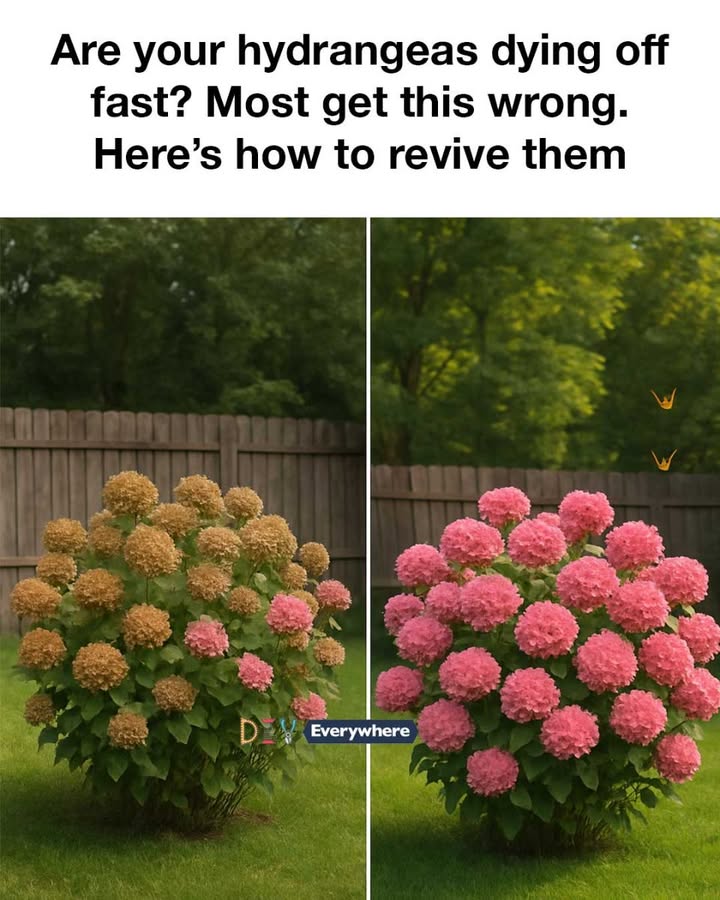
How to Revive a Hydrangea That Looks Almost Dead
If your hydrangea is truly struggling, follow this step-by-step revival plan:
Step 1: Check for Life
Scratch stems and check the crown for green tissue.
Step 2: Fix Watering
Switch to deep, slow watering. Stop daily sprinkling.
Step 3: Improve Soil
Add compost, mulch heavily, and loosen compacted soil.
Step 4: Reduce Stress
Provide afternoon shade and wind protection.
Step 5: Stop Feeding
Pause fertilizing for at least a season.
Step 6: Prune Only What’s Dead
Remove clearly dead wood—nothing more.
Give it 4–6 weeks. Hydrangeas recover slowly, but when they do, the change is dramatic.
Why Hydrangeas Are Worth the Effort
Hydrangeas aren’t fragile—they’re expressive. They tell you when something’s wrong, but they don’t give up easily.
Once established and properly cared for, a hydrangea can:
-
Live for decades
-
Bloom more each year
-
Handle heat better over time
-
Become one of the lowest-maintenance shrubs in your garden
Most “dying” hydrangeas are simply misunderstood.
Final Takeaway: Stop Panicking, Start Observing
If your hydrangeas are dying off fast, chances are you’re reacting instead of diagnosing.
Remember:
-
Wilting doesn’t mean death
-
More water isn’t always the answer
-
Pruning at the wrong time causes more damage than neglect
-
Healthy roots solve most problems
Fix the fundamentals, and your hydrangea will almost always forgive you.
Sometimes the best thing you can do for a struggling hydrangea…
