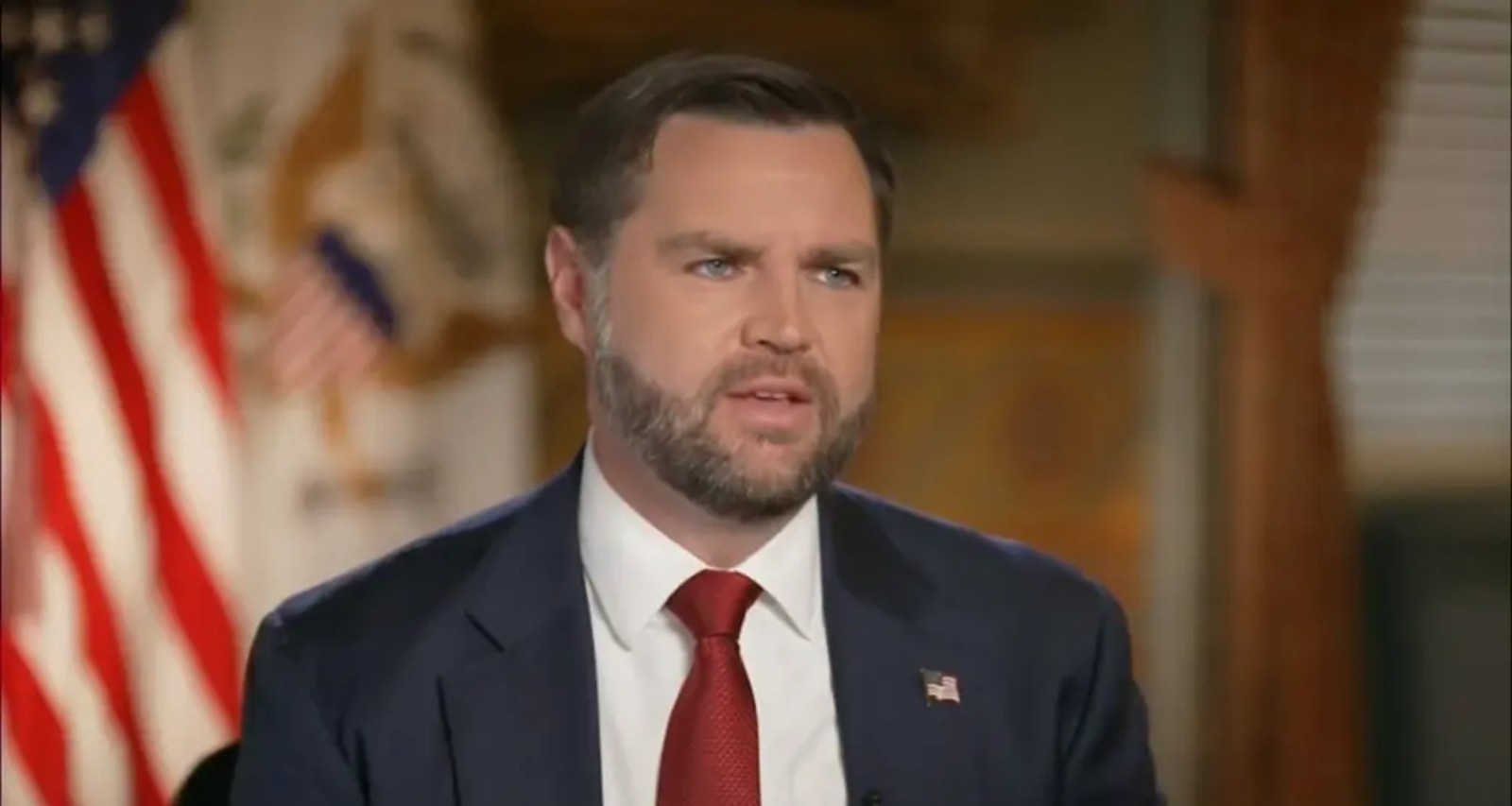
**Are Democrats Underestimating JD Vance for 2028?
An In-Depth Political Analysis**
At its core, the argument goes like this: Vance — a conservative firebrand turned national politician — might pose a stronger challenge in 2028 than many on the left assume, because his characteristics and trajectory could resonate with enough voters to make him competitive. But unpacking this requires nuance: we must separate perception from data, narrative from polling, and speculation from political reality.
Let’s begin with the man in question.
Who Is J.D. Vance? A Snapshot
James David “J.D.” Vance first entered national consciousness with his best-selling memoir Hillbilly Elegy, which recounted his upbringing in a struggling Appalachian family and attempted to explain the cultural dynamics of post-industrial America. That background gave him an unusual profile for a politician — part outsider, part cultural critic, part traditional conservative.
In 2024, Vance was selected as Donald Trump’s vice-presidential running mate, a choice that surprised many observers and raised eyebrows across the political spectrum. Since then, he has served as vice president, a role that traditionally involves limited public visibility but ample opportunity to position oneself for future runs at higher office.
Vance’s Public Image and Polling Realities
Favorability and Name Recognition
One key measure of a political figure’s viability is public perception. On this point, Vance’s numbers have been mixed.
Post-convention polling in 2024 showed that Vance struggled with broad national favorability, being one of the least liked vice-presidential nominees in decades in some metrics — with a notably net-negative rating overall. Republicans tended to view him more favorably than Democrats did, but his name recognition and likeability still lagged relative to other national figures.
Republican Support Potential
On the Republican side, some early polls have shown Vance ahead of other prospective Republican contenders for the 2028 nomination. A May 2025 survey reported that nearly 46% of Republican primary voters favored him over other names like Marco Rubio or Ron DeSantis. This suggests a base of support that could serve as a foundation if he chooses to run.
Yet it’s essential to remember that these polls are early, hypothetical, and far from definitive predictors of eventual outcomes — particularly since the political landscape is likely to shift dramatically between now and 2028.
Why Some on the Left Might Underestimate Him
A number of factors contribute to the argument that Democrats might be underestimating Vance:
1. Dismissal Based on Personality
Some on the left view Vance as uncharismatic, parochial, or too linked to Donald Trump to attract independent voters. There’s also a tendency for commentators to assume that cultural conservatism automatically repels broad swaths of the electorate.
2. Overconfidence in Democratic Branding
Another reason for underestimation could stem from confidence in the Democratic Party’s assumed ability to field winning candidates. Some on the left may believe that if Democrats simply nominate someone sensible and experienced, they’ll outperform any Republican challenger.
However, history shows us that midterms and presidential elections can be unpredictable, and economic or geopolitical stressors can swing voter sentiment in surprising directions. If Democrats fail to recruit compelling voices who can unify their diverse base and appeal to moderates, the conventional wisdom about who “should win” may prove fragile.
3. Misreading Trump’s Role
It’s worth noting that Vance’s political identity is deeply linked to the broader Trump movement — yet it is not reducible to it. Trump himself has not made a clear public commitment to endorsing Vance as his successor, and some insiders suggest Trump may not see Vance as the ideal heir.
However, Republican voters’ continued loyalty to the Trump coalition could still benefit Vance, even without an explicit endorsement.
Challenges Vance Faces (and Why Democrats Should Take Them Seriously)
Even if Democrats think Vance will fade away, several strategic realities argue for a more sober assessment of his future prospects.
1. The Vice President Advantage
Throughout American history, vice presidents have leveraged their national profiles into presidential bids — sometimes successfully, sometimes not. But the very fact of holding that office gives a politician an enduring platform, extensive network connections, and intimate involvement in national governance. This positions Vance well to build name recognition and political capital over time.
While it’s true that VPs often underperform compared to the presidents they served under, they still often win nominations, and they command substantial fundraising and party infrastructure.
2. Vance’s Ideological Position
Vance occupies an interesting ideological space: socially conservative, economically populist, and culturally combative. That mix could resonate with voters feeling squeezed by economic anxieties, cultural polarization, and distrust of elites. It’s a combination that has shown appeal in recent election cycles, particularly in battleground states where cultural and economic frustration is high.
This doesn’t guarantee a win — especially in general elections — but it could make Vance a formidable primary contender.
3. Democrats’ Own Strategic Uncertainties
On the Democratic side, the 2028 field is still taking shape. Potential candidates like Kamala Harris or Gavin Newsom have been mentioned as frontrunners, but there’s no consensus yet, and internal debates over direction — from progressive activists to moderates to centrists — continue.
If the party fails to unify or to cultivate a strong, broadly appealing nominee early, Republicans could capitalize on that vacuum — with someone like Vance positioned to define himself as a unifying alternative within his own party.
How Democrats Should Think About Him
Given this context, the claim that Democrats are underestimating Vance is less about asserting he’s inevitable and more about warning against complacency. Here’s what Democratic strategists (and voters) should consider:
1. Track Changing Voter Sentiment
Polling and elections are snapshots, not predictions. Democrats should watch how voters perceive economic performance, cultural issues, and leadership credibility over the next several years. If Vance’s message starts connecting in unexpected demographics, they’ll want to know sooner rather than later.
2. Develop Narrative Rather Than Reactive Tactics
Rather than dismissing Vance on personality or ideology, Democrats should build narratives that highlight contrasting visions for the country — focusing on issues where they hold strength (such as healthcare, innovation, social inclusion, environmental stewardship) while exposing the risks or limitations of their opponents’ approaches.
3. Avoid Internal Fragmentation
One of the consistent challenges for Democrats in recent cycles has been internal disagreement about direction. Creating a unified vision early — not just a primary coalition but a long-term messaging strategy — could bolster confidence among undecided and moderate voters who see political polarization as destabilizing.
Counterarguments and Complexities
It’s equally important to acknowledge counterarguments to the idea that Democrats are underestimating Vance:
1. He Still Has Low National Favorability
Wide groups of voters, especially independents and Democrats, currently view Vance unfavorably or are not familiar with him. That’s a real disadvantage going into a general election.
2. The Political Landscape Could Change Dramatically
Between now and 2028, economic conditions, foreign affairs, social movements, and unforeseen events could reset partisan dynamics entirely. A politician who seems viable today might be sidelined tomorrow.
Continue reading…
