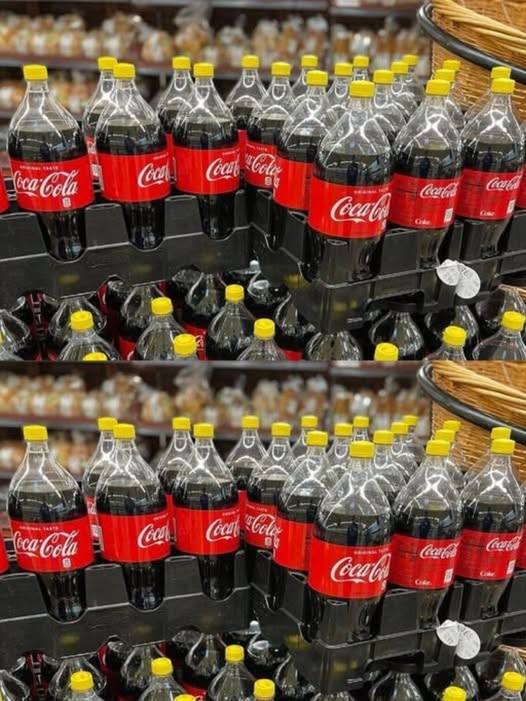
: What You Saw and Why It Caught Your Attention
Walking through a store and overhearing someone emphatically reject red‑cap Coca‑Colas in favor of yellow‑cap ones can seem odd if you’ve never encountered this before. Why would someone be so specific about the cap color on a soda bottle? Is it about taste? Health? A prank? A secret code?
🧠 Part I — The Visual Cue: Red Caps vs. Yellow Caps
🔴 Red Cap Coca‑Cola — The Everyday Classic
Most Coca‑Cola bottles you’ve ever seen have a classic red cap. That’s what Coca‑Cola has used for decades as part of its iconic global branding. It’s instantly recognized worldwide — from supermarkets in New York to kiosks in Tokyo.
These products are:
Sweetened with high‑fructose corn syrup (HFCS) in markets like the United States
Certified kosher for general consumption most of the year
The default, “normal” cola formula most consumers know and drink every day
In short: red‑capped bottles are the standard Coca‑Cola you expect.
💛 Yellow Cap Coca‑Cola — A Special Seasonal Version
➡️ Yellow caps indicate that the Coke inside is made with real sugar (sucrose) instead of corn syrup and is certified as kosher for Passover.
This is not a random marketing gimmick — it’s a functional, intentional way for Coca‑Cola to communicate to a specific group of consumers that this bottle meets particular requirements.
📜 Part II — Behind the Yellow Cap: What “Kosher for Passover” Means
To understand the yellow cap, we need to understand a bit about Jewish dietary rules — specifically during the holiday of Passover.
🕊️ What Is Passover? (A Quick Primer)
Passover — known in Hebrew as Pesach — is one of the most important Jewish holidays. It commemorates the biblical story of the Israelites’ liberation from slavery in Egypt.
For eight days, observant Jews follow strict dietary rules that restrict foods containing “chametz” — that is, leavened grains and certain foods derived from grains.
🚫 Why Regular Coca‑Cola Isn’t “Passover Kosher”
Here’s where it gets interesting:
Coca‑Cola is generally certified kosher year‑round.
But kosher for Passover is a stricter standard than regular kosher certification.
High‑fructose corn syrup is derived from corn, which many observant Jews (especially those of Ashkenazi background) avoid during Passover.
So while ordinary Coke is kosher normally, its regular ingredients — especially corn syrup — don’t meet Passover dietary standards for some people.
🥄 The Ingredient Switch: Sucrose Instead of Corn Syrup
To solve this, Coca‑Cola produces a Passover‑friendly version of its drink by:
✔ Replacing high‑fructose corn syrup with sucrose (table sugar, typically from cane or beets)
✔ Ensuring the formula meets Passover‑specific kosher certification
✔ Packaging these bottles with yellow caps so they’re easy to recognize
This shift back to real sugar is similar to the way Coca‑Cola was originally made before HFCS became widespread in the 1980s.
The yellow cap becomes a simple visual signal: “This bottle meets Passover standards.”
🧩 Part III — Taste, Culture, and Consumer Behavior
🍬 Does the Yellow‑Cap Coke Taste Different?
Yes — many people report that yellow‑cap Coca‑Cola tastes different from the red‑cap version. Why?
Sucrose (real sugar) behaves a bit differently on the palate than high‑fructose corn syrup.
Some people describe the sucrose version as crisper or cleaner in flavor.
It’s similar in taste to Mexican Coke, which is also sweetened with sugar.
These taste perceptions are subjective, but they’re widely discussed online by fans of the yellow‑cap bottles.
📆 When You See Yellow Caps on Shelves
Coca‑Cola doesn’t sell yellow‑cap bottles year‑round. Instead:
They appear each spring around Passover
They’re produced in limited quantities
Once Passover ends, they generally disappear from shelves until the next year
That’s why people who love them often stock up while they’re available — much like seasonal food editions. Some even save them for cooking or mixing drinks because of the sugar sweetness.
📊 Not Just Religious Consumers Like It
Interestingly, yellow‑cap Coke has become something of a cultural phenomenon beyond its original religious purpose:
Fans of real‑sugar cola seek them out as a “premium” version
Social media posts show people hunting for them in stores
Some consumers think they taste better than the common corn syrup version
So when you heard the woman insist she would only buy the yellow‑cap ones, it might have been partly taste preference and partly religious observance.
🗣️ Part IV — Why Someone Might Sound Passionate or “Angry”
Let’s break down why the woman you overheard may have seemed intense about it.
1. Religious Observance
If someone is keeping Passover, they must abide by dietary laws that are important and deeply meaningful. It’s about identity, tradition, and spiritual commitment — not trivial preference.
For many observant Jews, choosing the Passover‑approved soda isn’t optional; it’s part of honoring a sacred practice.
Even if Coca‑Cola is kosher year‑round, the Passover restriction is stricter — and for those watching, corn and its derivatives are completely off limits during that period.
2. **Limited Availability and Scarcity
Because the yellow‑cap bottles only appear for a short window each year and are limited in number, some shoppers who want them — for religion or taste — can get frustrated if others buy them up.
This means tension can arise in the soda aisle — especially late in the Passover season when stock is running low.
3. **Taste Preference
Even if someone isn’t observing Passover, they may prefer the yellow‑cap version’s real sugar. People can be very vocal about food preferences!
These strong preferences can make a casual choice sound like a big deal to an outside observer.
🧠 Part V — A Bit of History Behind It
This practice isn’t new:
Coca‑Cola has been producing kosher‑for‑Passover formula versions since at least the 1930s.
The tradition spread as consumer demand for kosher products grew.
The yellow cap is a modern, visible marker of that Passover‑compliant product.
What started as a way to respect religious dietary laws has, over decades, turned into both a cultural curiosity and a sought‑after seasonal product.
🧩 FAQs: Your Curious Questions Answered
❓ Is the yellow cap used everywhere?
Mostly this appears in the United States and markets where Coca‑Cola uses high‑fructose corn syrup in its main formula. In many countries outside the U.S., Coca‑Cola is already sweetened with sugar year‑round, so the color coding may not be used exactly the same way.
❓ Does everyone interpret the yellow cap the same way?
Not always. In some places or promotions unrelated to Passover, cap colors might be used for marketing, flavor identifiers, or contests. But for Coca‑Cola in the U.S. around this time of year, Passover kosher status is the predominant reason.
❓ Is one version healthier?
Not inherently. It all comes down to personal dietary philosophy:
Continue reading…
