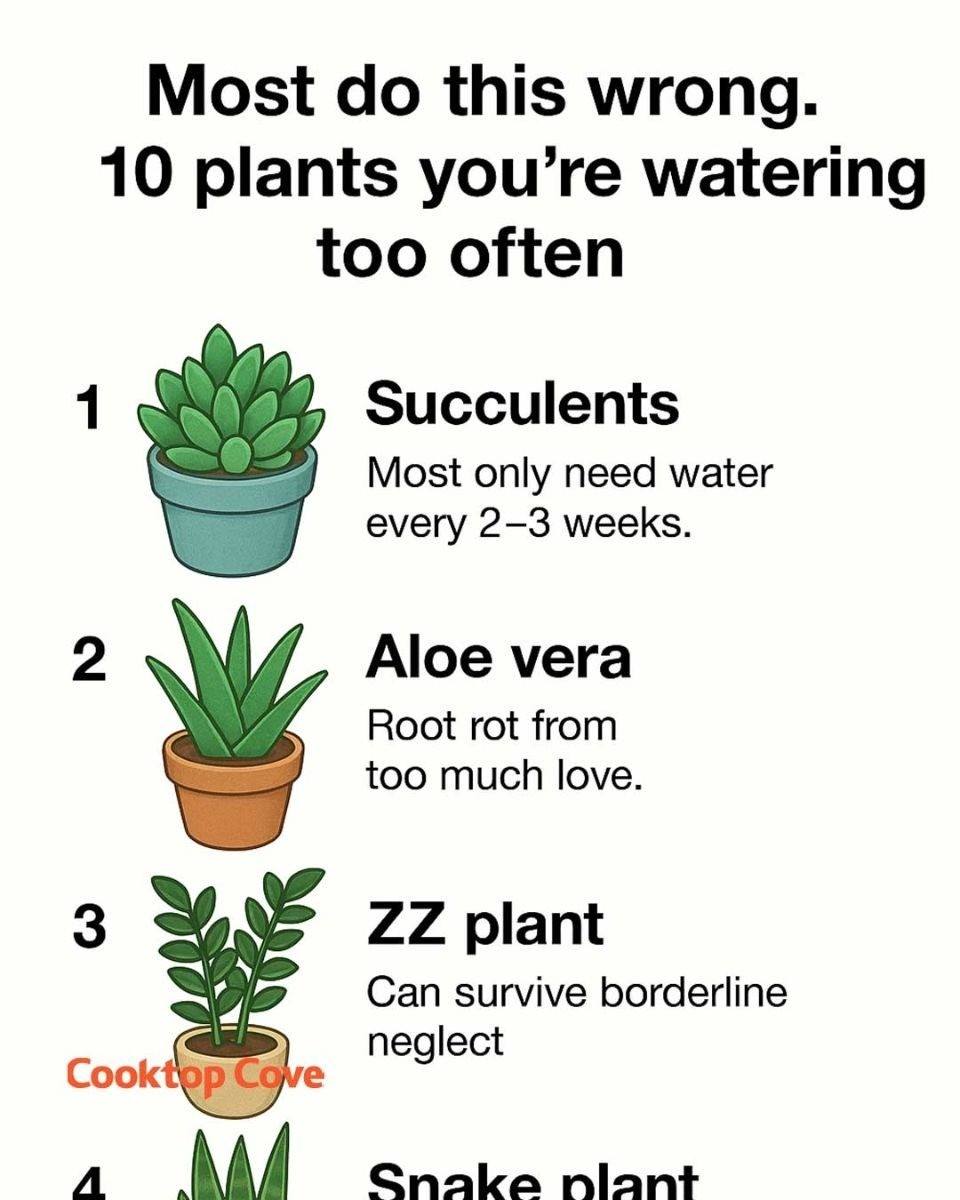
10 Plants You’re Watering Too Often (And How to Fix It)
Watering is one of the trickiest parts of plant care. Many of us are guilty of overwatering — it’s an easy mistake, especially when we see drooping leaves or dry soil. But the truth is, overwatering can be more harmful than underwatering. Roots suffocate, soil stays soggy, and plants become prone to disease. Some of the most common houseplants are particularly sensitive to water, and they’re dying in silence while we think we’re helping.
1. Snake Plant (Sansevieria)
Snake plants are famously low-maintenance, which makes overwatering their number one killer. These succulents store water in their leaves and only need watering every 2-6 weeks, depending on temperature and humidity.
Signs of overwatering:
Mushy, yellowing leaves
Rotting roots
Fungus growth in soil
Watering tip:
Let the soil dry completely before watering. In winter, water even less — sometimes only once a month.
2. ZZ Plant (Zamioculcas zamiifolia)
Signs of overwatering:
Dark, mushy stems
Leaves turning yellow or soft
Soil constantly wet
Watering tip:
Water only when the top 2-3 inches of soil are dry. Stick your finger in the soil to check — if it’s damp, hold off.
3. Aloe Vera
Aloe vera thrives in dry conditions. Frequent watering causes the roots to rot and leaves to become soggy and discolored.
Brown or black mushy spots on leaves
Soil smells musty
Plant looks limp
Watering tip:
Water every 3 weeks or when the soil is completely dry. Use a pot with drainage holes to prevent water accumulation.
4. Fiddle Leaf Fig (Ficus lyrata)
Fiddle leaf figs are trendy and can be dramatic with their growth, but overwatering is a common problem. Their roots are sensitive to standing water, which can trigger leaf drop.
Signs of overwatering:
Drooping or yellowing leaves
Brown spots on leaves
Soil stays soggy for days
Watering tip:
Check soil moisture 1-2 inches below the surface. Water only when dry. Rotate the plant for even growth.
5. Peace Lily (Spathiphyllum)
Peace lilies are known for drooping when thirsty, which often misleads owners into watering too much. Overwatering causes root rot faster than underwatering.
Signs of overwatering:
Yellowing leaves at the base
Mushy roots
Mold on soil surface
Watering tip:
Keep soil lightly moist, not soggy. Water once a week, or when the top 1-2 inches are dry.
6. Pothos (Epipremnum aureum)
Pothos are forgiving plants, but their roots don’t like constant moisture. Overwatering can stunt growth and cause yellowing leaves.
Signs of overwatering:
Leaves turning yellow
Root rot
Moldy soil
Watering tip:
Let soil dry between waterings. In winter, cut back on watering frequency.
7. Spider Plant (Chlorophytum comosum)
Spider plants love well-draining soil. Overwatering leads to root rot and brown leaf tips.
Signs of overwatering:
Brown tips
Mushy roots
Leaves curling
Watering tip:
Water thoroughly but allow the top inch of soil to dry first. Avoid letting the plant sit in water.
8. Jade Plant (Crassula ovata)
Jade plants are succulents and store water in their thick leaves. Overwatering causes leaf drop, root rot, and mushy stems.
Signs of overwatering:
Continue reading…
