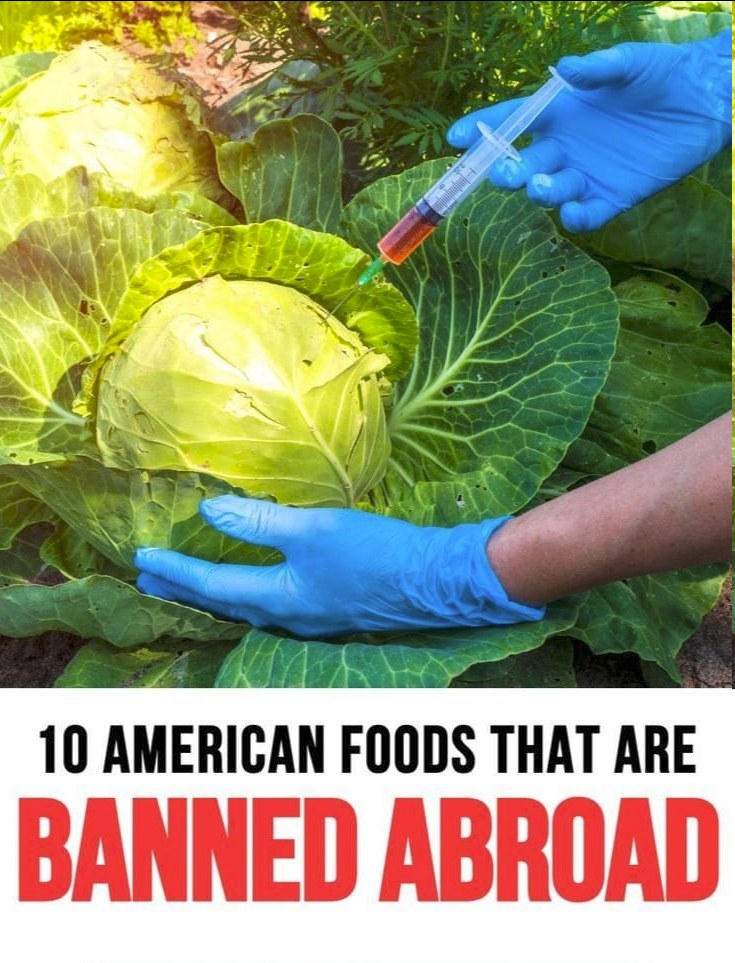
🍔 10 American Foods That Are Banned Abroad
Understanding what’s banned elsewhere — and why
Let’s explore 10 quintessentially American foods or food categories that you can usually find in the U.S. but can’t find — at least not in the same form — in other parts of the world. We’ll explain what they are, why they’re banned or restricted, and what other countries’ regulators have to say about them.
🥤 1. Mountain Dew & Other Citrus Soda (BVO Drinks)
What it is
Mountain Dew is an iconic American soda, known for its bright color and sweet citrus flavor. Other sodas — like Fresca and Sunkist — also fall into this category.
What’s the issue?
These sodas historically contained brominated vegetable oil (BVO), which was used as an emulsifier to keep citrus flavoring from separating. BVO contains bromine — the same element used in flame retardants — and was linked to health concerns like memory issues, skin problems, and neurological effects when consumed in large amounts.
Where it’s banned
European Union — BVO is banned and cannot be sold in sodas.
Japan — Prohibits BVO in food.
PepsiCo publicly removed BVO from Mountain Dew recipes in 2020, but the drink is still not sold in some markets because regulatory approvals haven’t caught up.
🥣 2. American Breakfast Cereals with BHT or BHA
What it is
Many classic American breakfast cereals — like Kellogg’s Frosted Flakes, Rice Krispies, and Honey Bunches of Oats — use chemical preservatives such as BHT (butylated hydroxytoluene) and BHA (butylated hydroxyanisole) to extend shelf life.
What’s the issue?
These synthetic antioxidants help prevent fats from going rancid, but they’ve been linked in animal studies to tumor formation and potential carcinogenic effects. Regulators around the world have adopted a “precautionary approach,” banning substances that show even a potential risk.
Where it’s banned
European Union — BHT/BHA are prohibited in foods.
Instead of the U.S. formulations, cereal manufacturers sell modified versions overseas that either omit the chemicals or use alternatives.
🍬 3. Skittles & Colorful Candy with Synthetic Dyes
What it is
Anything brightly colored and candy-based — like Skittles, Twizzlers, Froot Loops, and similar snacks — often uses artificial dyes such as Yellow 5, Yellow 6, Red 40, and previously titanium dioxide (E171).
What’s the issue?
Artificial colorings have been linked (though data isn’t conclusive) to allergic reactions, hyperactivity in children, and — in the case of titanium dioxide — potential DNA damage.
Where it’s banned or restricted
Norway & Austria — Several artificial dyes are outright banned.
European Union — Requires warning labels for certain dyes and has banned titanium dioxide.
Note: Some candy manufacturers reformulate products for sale in Europe, while others simply aren’t sold there.
🧊 4. Coffee-Mate & Partially Hydrogenated Oils
What it is
Coffee-Mate is a famous non-dairy creamer. Its original formulations included partially hydrogenated oils, a major source of industrial trans fats.
What’s the issue?
Trans fats raise LDL (“bad”) cholesterol and increase cardiovascular disease risk. While the U.S. banned many trans fats in 2018, traces still appear in older products or formulations.
Where it’s banned
Denmark, Switzerland, Hungary, Austria, Norway — Coffee-Mate has been banned due to trans fat concerns.
In these markets, creamer products have to comply with stricter fat standards or be reformulated entirely.
🥨 5. Ritz Crackers & Products with Trans Fats
What it is
Ritz Crackers and similar snack crackers historically used partially hydrogenated cottonseed or soybean oil, producing trans fats.
What’s the issue?
Like Coffee-Mate, products with trans fats raise the risk of heart disease, which is why many countries have phased them out aggressively.
Where it’s restricted or banned
Parts of Europe — Denmark and other EU countries have strict limits — effectively banning products that rely on trans fats.
Even where not banned outright, labels must indicate high trans fat content — a deterrent.
🍖 6. Ractopamine-Treated Pork & Other Meat with Growth Promoters
What it is
In the U.S., some pork and beef are raised with ractopamine, a drug used to promote lean muscle growth in animals.
What’s the issue?
Many countries view ractopamine as unsafe due to potential cardiovascular and neurological effects, and have chosen a cautious approach.
Where it’s banned
European Union — Bans meat with ractopamine residues.
Russia, China, Taiwan — Also prohibit ractopamine-containing imports.
This means some U.S. pork products aren’t sold in those markets unless certified ractopamine-free.
🍗 7. Chlorine-Washed Chicken
What it is
In the U.S., poultry processing often includes washing chicken carcasses with chlorine or similar sanitizing solutions to reduce pathogens.
What’s the issue?
European regulators believe in strict safety standards throughout the production chain (“farm-to-fork”), rather than relying on a chemical wash at the end of production. They fear chlorine may mask underlying problems and worry about residues.
Where it’s banned
European Union — Chlorine-washed chicken is illegal for sale.
This is often one of the first things visitors notice about European supermarket poultry.
🍟 8. Instant Mashed Potatoes & Foods with BHA/BHT Additives
What it is
Instant mashed potatoes, packaged snack mixes, and other processed foods often use BHA and BHT preservatives.
What’s the issue?
As with cereals, BHA/BHT are linked to tumor formation in animals and possible carcinogenic effects. Regulators abroad tend to ban substances with any suggestion of harm.
Where it’s banned
European Union & Japan — Restrictions or outright bans exist.
Note: Instant mashed potatoes may still be sold if reformulated without these ingredients.
Continue reading…
