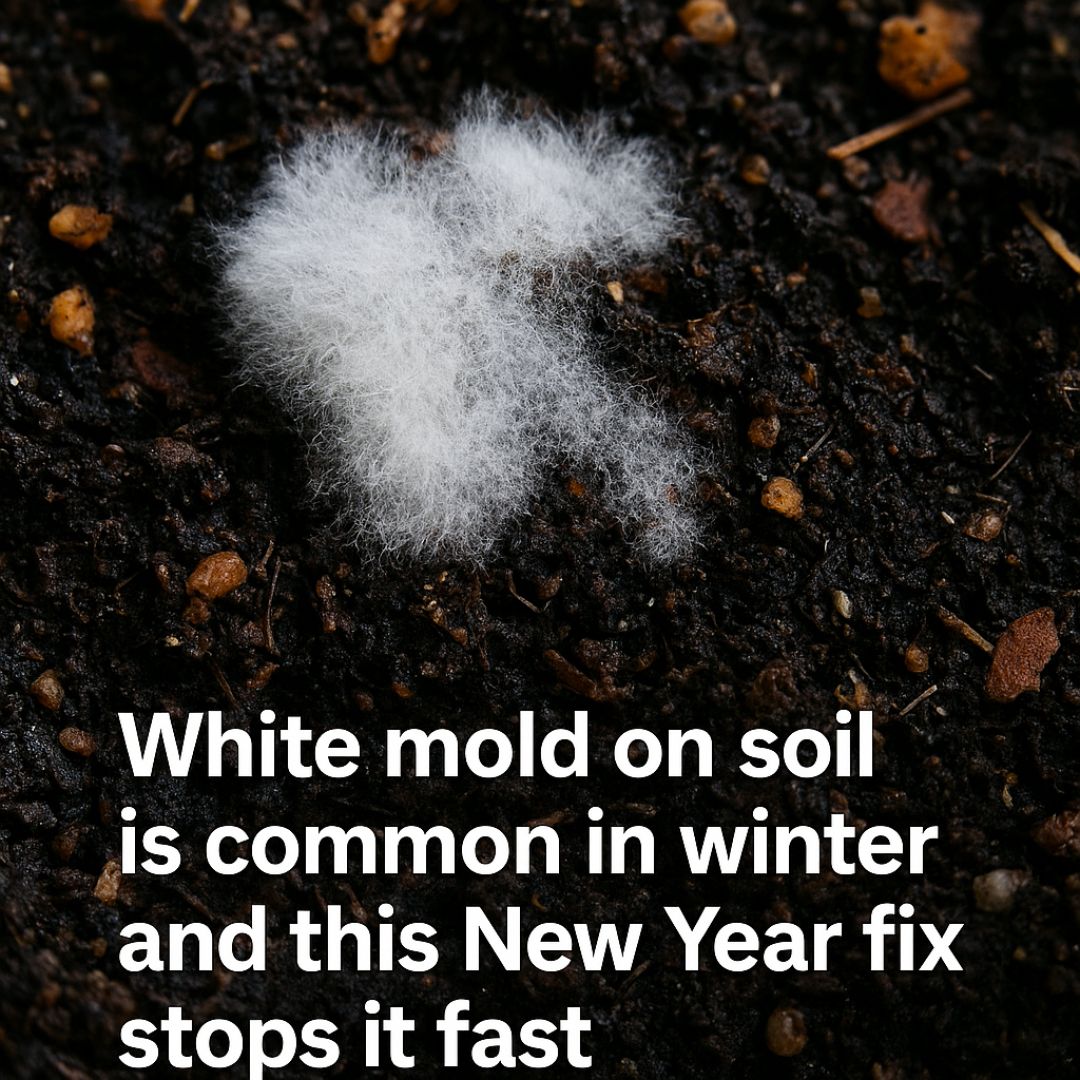
White Mold on Soil Is Common in Winter — and This New Year Fix Stops It Fast
White mold on soil is one of those winter surprises no plant lover enjoys. You check on your houseplants or garden beds during the colder months, and suddenly there it is: a fuzzy white layer creeping across the soil surface like powdered sugar or cotton wool. It looks alarming, unhealthy, and—let’s be honest—a little gross.
The good news?
White mold on soil is very common in winter, usually not fatal, and in most cases easy to fix. Even better, a simple New Year reset can stop it fast and keep it from coming back.
-
What white mold on soil actually is
-
Why it shows up more in winter
-
Whether it’s dangerous to plants (or people)
-
The exact New Year fix that works quickly
-
Long-term prevention tips for the rest of the year
If your soil is looking fuzzy right now, don’t panic. Let’s fix it.
What Is White Mold on Soil?
White mold on soil is usually a fungal growth caused by excess moisture, poor air circulation, and cool temperatures. It often appears as:
-
A thin white crust on the soil surface
-
Powdery or web-like growth
In most cases, it’s a saprophytic fungus, meaning it feeds on decaying organic matter, not your plant itself. This includes:
-
Dead roots
-
Decomposing leaves
-
Old potting mix
-
Organic mulch
Common Types of White Mold You’ll See
-
Saprophytic fungi
The most common and least harmful type. Annoying, but manageable. -
Powdery residue from mineral buildup
Sometimes mistaken for mold but caused by salts from fertilizers or hard water.
Knowing which one you’re dealing with helps, but the fix is often the same.
Why White Mold Is So Common in Winter
White mold doesn’t suddenly appear because you’re doing something “wrong.” Winter conditions naturally create the perfect environment for fungal growth.
1. Overwatering Happens Easily
In winter:
-
Plants grow more slowly
-
They use less water
-
Soil dries out much more slowly
But many people keep watering on their summer schedule. That excess moisture sits in the soil—and mold loves it.
2. Poor Air Circulation Indoors
Closed windows, heaters running, and still indoor air reduce evaporation. Without airflow, moisture lingers on the soil surface.
3. Lower Light Levels
Less sunlight means:
-
Slower soil drying
-
Reduced plant metabolism
-
Cooler, damp soil conditions
Fungi thrive in exactly this environment.
4. Organic-Rich Potting Mixes
High-quality potting soils often contain compost, bark, peat, or coconut coir. These materials are great for plants—but also tasty for fungi when conditions are right.
Is White Mold Dangerous to Plants?
Short answer: usually no.
White mold on soil is rarely fatal to healthy plants. However, it can signal problems that may harm plants over time.
When It’s Mostly Harmless
-
Mold is only on the soil surface
-
Plant leaves look healthy
-
No foul smell from the soil
-
Roots are firm and white
When It Can Become a Problem
-
Mold keeps returning quickly
-
Soil smells sour or rotten
-
Leaves yellow, wilt, or drop
-
Roots are brown or mushy
In these cases, mold isn’t the cause—it’s a symptom of poor growing conditions, often linked to root rot.
Is White Mold Harmful to Humans or Pets?
In most homes, no.
That said:
-
People with mold allergies may be sensitive
-
Pets should not dig or ingest moldy soil
-
Heavy, persistent mold indoors should be addressed
If the mold smells strongly musty or spreads rapidly, it’s best to treat it promptly and improve ventilation.
The New Year Fix That Stops White Mold Fast
Here’s the part you came for.
This New Year reset method works because it targets the root causes of winter mold, not just the symptoms.
Step 1: Remove the Moldy Layer (Immediate Relief)
Using a spoon or small trowel:
-
Gently scrape off the top 1–2 inches of moldy soil
-
Dispose of it in the trash (not compost)
-
Avoid stirring mold deeper into the pot
This instantly removes the visible problem.
Step 2: Let the Soil Dry Properly
This is the most important step.
-
Stop watering for several days
-
Allow the top 2–3 inches of soil to dry fully
-
Lift the pot—lighter weight means drier soil
If your plant tolerates it, slightly underwatering for a short period is far safer than staying too wet.
Step 3: Improve Drainage (The Real Fix)
Poor drainage = recurring mold.
Quick fixes:
-
Make sure pots have drainage holes
-
Empty saucers after watering
-
Elevate pots slightly for airflow
Long-term fix:
-
Repot using fresh, well-draining soil
-
Add perlite, pumice, or coarse sand
-
Avoid reusing old, compacted soil
Step 4: Increase Air Circulation
You don’t need fancy equipment.
Simple solutions:
-
Open windows briefly when weather allows
-
Use a small fan nearby (not directly on plants)
-
Space plants slightly farther apart
Airflow dries soil surfaces and disrupts fungal growth.
Step 5: Apply a Natural Anti-Fungal Treatment
If mold persists, these safe options work well:
Cinnamon (Fast & Natural)
-
Sprinkle a thin layer on the soil surface
-
Cinnamon is a natural antifungal
Baking Soda Spray
-
½ teaspoon baking soda
-
1 quart water
-
Lightly mist soil surface
Hydrogen Peroxide (3%)
-
Mix 1 part peroxide to 3 parts water
-
Pour lightly onto soil once
-
Kills fungal spores and oxygenates roots
Use treatments sparingly—once or twice is enough.
Why This Fix Works So Well in the New Year
January is actually the perfect time to deal with white mold because:
-
Plants are dormant or slow-growing
- Continue reading…
