Legislation
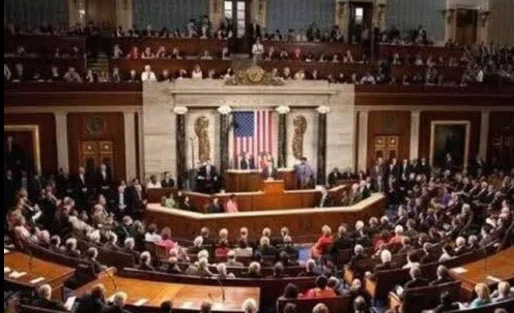
On May 22, 2025, the United States Senate — then under Republican control — cast a dramatic and deeply polarizing vote, passing legislation by a 51‑44 margin aimed at overturning landmark environmental regulations that had shaped climate policy for decades. The vote sparked a cascade of political uproar, legal threats, and debate about federal authority, states’ rights, climate action, and the future of U.S. regulatory law.
Below, we analyze the bill’s content, the political backdrop leading to the vote, each side’s arguments, the procedural controversies involved, reactions from political leaders and stakeholders, and potential consequences for the American political and legal landscape.
I. Background: What the Senate Voted On
Among the waivers was the much‑discussed “EV mandate” — a policy that would have effectively required all new passenger vehicle sales in California to be zero‑emissions by 2035. California’s authority to set its own strict emission standards has historically enabled it to pursue aggressive climate policy and has influenced other states to adopt similar standards.
The Senate vote invoked the Congressional Review Act (CRA) to rescind these waivers. CRA is a rarely used legislative tool that allows Congress to overturn certain federal agency actions with a simple majority vote.
II. The Vote: 51‑44 and What It Signifies
The Numerical Breakdown
The final tally — 51 senators in favor and 44 against — reflected a strictly majority‑rule governance moment on a matter of national regulatory policy. While many legislation efforts in the Senate require a 60‑vote supermajority to overcome a filibuster, resolutions under CRA can pass with a simple majority when properly applied.
Notably, one Democrat — Senator Elissa Slotkin of Michigan — crossed party lines to support the repeal of the waivers, citing concerns for the U.S. auto industry and workers in her state.
All other Democratic senators present voted against the legislation, and both sides framed the vote as a stark choice in the fight over climate policy and federal versus state authority.
III. What the Legislative Change Would Do
A. Revocation of Emission Waivers
California’s waiver authority allowed the state to set pollution standards that were more stringent than federal requirements, including tighter limits on nitrogen oxides, particulate matter, and other harmful emissions.
By revoking these waivers, the Senate acted to preempt California’s regulatory authority, directly impacting the state’s ability to enforce the upcoming 2035 zero‑emission vehicle standard.
B. Broader Regulatory Impacts
Because many automakers design vehicles to meet California’s higher standards — in part because several other states follow those standards — revoking the waivers could ripple across national auto markets and emissions regulation more generally.
IV. Political Context and the Path to the Vote
A. Congressional Gridlock and Partisan Frustration
The vote occurred amidst broader legislative friction in Washington. In 2025, the Senate — split narrowly between Republicans and Democrats — had experienced frequent standoffs over issues ranging from government funding to healthcare to foreign policy. This broader gridlock heightened the stakes of any high‑profile vote.
B. Executive Branch Posture
At the time, Republican leadership in Congress was aligned with Republican President Donald Trump, who had previously advocated for rolling back certain federal climate regulations. This alignment made the Senate more willing to entertain aggressive use of the CRA.
Democratic legislators and environmental advocates argued that the CRA was misused — both legally and procedurally — to overturn actions that were not eligible for review under the law, as confirmed by various legal interpretations.
V. Major Arguments For and Against the Legislation
A. Supporters’ Perspective
Supporters of the vote — primarily Senate Republicans and the one Democratic defector — outlined several key justifications:
Economic Concerns and the Auto Industry
Senator Slotkin, representing Michigan — home to a major automotive workforce — contended that the sweeping emission standards threatened jobs and economic stability for workers whose livelihoods depend on traditional auto manufacturing.
Regulatory Overreach
Some Republicans described California’s rules as federal overreach by another name, arguing that climate policy should not be dictated through waivers that acted as de facto national mandates.
Senate Majority Leader John Thune referred to the previous approval of waivers as a covert imposition of a nationwide electric vehicle requirement, something he and his allies opposed.
B. Opponents’ Perspective
Environmental and Public Health
Opponents argued that revoking California’s emission standards would slow the nation’s transition to cleaner vehicles, increase air pollution, and undermine long‑term climate goals.
Governor Gavin Newsom of California called the Senate action illegal and pledged to pursue immediate legal action. He emphasized the environmental consequences of the revocation and decried what he saw as heavy‑handed federal interference.
States’ Rights and Legal Precedent
Democratic lawmakers framed the vote as an affront to California’s longstanding right — recognized under federal statute — to tailor its policies to protect public health.
Senator Alex Padilla stated that the use of CRA to revoke waivers was a violation of decades of precedent and that it undermined the authority of states to act in the interests of their residents.
Rule of Law and Congressional Procedure
Critics also argued that applying the CRA in this context was legally dubious, as the waivers might not qualify as agency “rules” subject to review. This position was supported by the Senate parliamentarian and other legal authorities, intensifying the controversy.
VI. Immediate Reactions and Fallout
A. California’s Response
Governor Newsom’s administration signaled immediate plans to pursue legal challenges against the Senate decision, asserting that the vote was both unlawful and dangerous for public health.
California officials emphasized that the state would continue to enforce its standards and work with automakers and environmental groups to protect residents and the broader environment.
Continue reading…
