Marco Rubio: From Miami Son to U.S. Secretary of State — A Full Political Biography
Marco Antonio Rubio’s journey from the son of Cuban immigrants in Miami to one of the most influential figures in American foreign policy encapsulates the evolution of the Republican Party over the last two decades. Known for his early alignment with fiscal conservatism, his 2016 presidential bid, and his later emergence as a key Trump ally, Rubio’s career offers insight into both the triumphs and tensions within modern U.S. politics.
Early Life and Roots
Born on May 28, 1971, in Miami, Florida, Marco Rubio’s roots lie deep in the Cuban exile community. His parents fled Fidel Castro’s Cuba in 1956, settling in the United States in search of freedom and opportunity. Growing up in a working-class family — his father a bartender and his mother a hotel housekeeper — Rubio’s early life was shaped by immigrant ambition and conservative cultural values.
Education and Early Political Forays
Rubio attended the University of Florida, graduating in 1993, and then earned a law degree from the University of Miami School of Law in 1996. Early in his career, he worked as an aide to Rep. Ileana Ros-Lehtinen, the first Cuban-American woman elected to Congress. This role gave him a front-row seat into the mechanics of federal politics.
His first elected office was on the West Miami City Commission in the late 1990s. By 2000, Rubio had secured a seat in the Florida House of Representatives. During his tenure there, he steadily climbed the ranks — becoming majority leader in 2003 and then Speaker of the Florida House by 2006, all before turning 35.
These early leadership roles helped Rubio hone legislative skills, build a state-level profile, and cultivate an image as a rising star in Republican politics.
U.S. Senate: A New National Voice
In 2009, Rubio announced his run for the U.S. Senate seat from Florida, which had been vacated by Mel Martinez. Initially trailing in the GOP primary, his prospects brightened after former Florida Gov. Charlie Crist left the Republican Party, creating space for Rubio to claim the nomination. He went on to win the 2010 general election comfortably.
Once in the Senate (2011–2025), Rubio quickly became associated with the Tea Party movement, advocating for limited government, fiscal restraint, and free markets — positions that resonated with the GOP’s conservative base. His legislative record emphasized lower taxes, reduced federal spending, and deregulation.
Despite his conservative bona fides, Rubio occasionally diverged from party orthodoxy. Most notably, in 2013 he co-authored comprehensive immigration reform legislation that included a pathway to citizenship for undocumented immigrants meeting certain criteria. While the measure ultimately failed in the Senate, it underscored his early willingness to pursue bipartisan solutions.
The 2016 Presidential Bid: A Turning Point
Rubio’s national profile peaked with his entry into the 2016 Republican presidential primary. His campaign focused on traditional GOP priorities: balanced budgets, repealing the Affordable Care Act, tax reform, and border security.
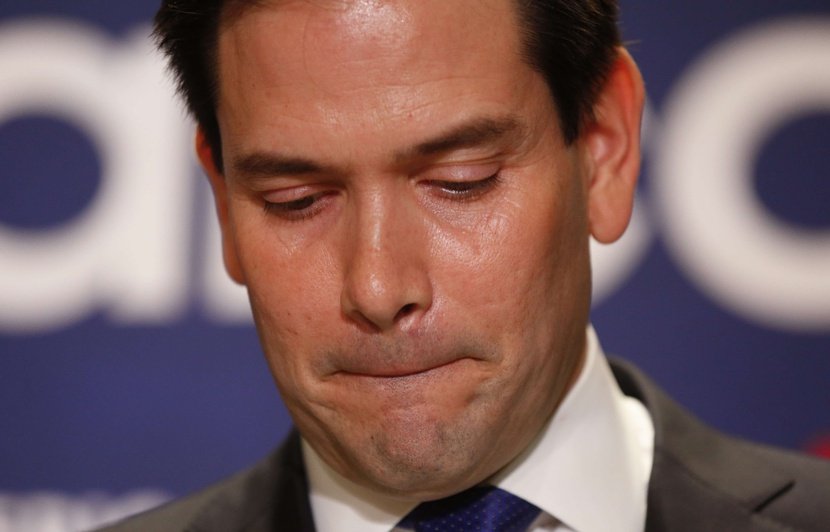
Although initially considered part of the party establishment’s preferred slate of candidates, Rubio struggled to gain traction as the race became dominated by outsider Donald Trump and firebrand Ted Cruz. Trump repeatedly mocked Rubio as “Little Marco,” undermining his standing with key GOP voters. Rubio managed only one state victory and ultimately bowed out after losing his home state of Florida.
Rubio and Trump: From Rivals to Partners
Initially a critic of Trump during the 2016 primaries, Rubio later aligned himself more closely with the former president, especially after Trump’s 2017 inauguration. Over time, Rubio became a vocal supporter of key Trump policies, including strong border enforcement and conservative social positions.
Notably, after the 2020 election — which Joe Biden won — Rubio voiced support for Trump’s claims of widespread voter fraud, despite the absence of evidence. However, following the January 6, 2021 Capitol attack, he voted to certify the electoral results, underscoring a complicated relationship with party loyalty and institutional norms.
This evolution culminated in 2024 when Rubio’s loyalty and foreign policy experience made him an appealing pick for Trump’s second-term Cabinet.
Continue reading…
