Story of the Day
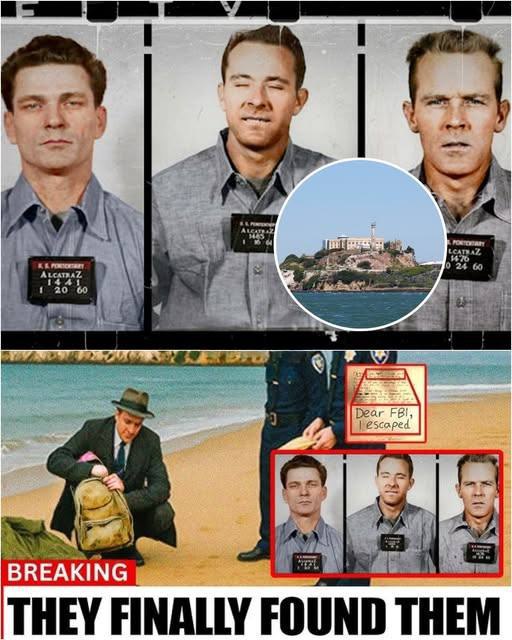
Alcatraz Federal Penitentiary, perched ominously on a rocky island in San Francisco Bay, has long captured the public imagination. Known as “The Rock,” it was home to America’s most dangerous criminals, a prison so secure that escape seemed impossible. Yet in June 1962, three inmates—Frank Morris, and brothers Clarence and John Anglin—defied the odds and vanished from Alcatraz in what would become one of the most legendary prison escapes in history.
A Prison Built to Be Inescapable
Alcatraz opened as a federal prison in 1934, designed to house the nation’s most dangerous criminals, including Al Capone and George “Machine Gun” Kelly. Its isolated location, surrounded by frigid waters and strong currents, made escape nearly impossible. Prisoners would have to contend not only with razor wire and armed guards but also with hypothermic waters and sharks—or so the stories go.
The prison’s reputation for security was unmatched. Cells were small and austere, bars were reinforced, and routine inspections made hiding anything nearly impossible. Despite these measures, the very structure that made Alcatraz “escape-proof” also made it a magnet for bold criminal minds willing to test their wits.
The Men Behind the Escape
Frank Morris was an intelligent and resourceful career criminal with a reported IQ of 130. He had a history of bank robberies and had been incarcerated multiple times before being sent to Alcatraz.
The Anglin brothers, Clarence and John, were smaller-time criminals compared to Morris but shared his ambition and cunning. Clarence, known for his meticulous planning, and John, noted for his calm demeanor, would become the perfect accomplices for one of the most famous escapes in history.
Morris and the Anglins met in Alcatraz’s education program, where they reportedly bonded over their shared desire to escape the island. Together, they devised a plan that would eventually baffle authorities for decades.
The Ingenious Escape Plan
1. Crafting Dummy Heads
To buy time during nightly inspections, the inmates crafted dummy heads from a mixture of soap, toilet paper, and real human hair stolen from the prison barber shop. They painted the heads with flesh tones, added hair carefully, and even included details like teeth and eyes. When guards did their nightly headcount, they would see what looked like sleeping prisoners instead of empty cells.
2. Chiseling Their Way Out
Over several months, the men quietly chipped away at the concrete walls of their cells using makeshift tools, including spoons and a sharpened metal piece from a fan motor. They created a small opening just large enough to crawl through, cleverly covering the holes with vent covers to avoid detection.
3. The Ventilation Maze
Once they escaped their cells, the men had to navigate a series of utility corridors and ventilation shafts. These passages led them to the roof of the prison, from where they could access the waters surrounding Alcatraz. The tunnels were dark, claustrophobic, and dangerous, yet the men maneuvered through them with astonishing precision.
4. The Raft and Life Vests
The Night of the Escape
On the night of June 11, 1962, the plan was set into motion. The three men slipped through their cell walls, crawled through the utility corridors, and climbed to the roof under the cover of darkness. They launched their raft and disappeared into the chilly waters of San Francisco Bay.
The next morning, guards discovered the empty cells and dummy heads. Panic ensued as authorities realized the impossible had happened: three inmates had escaped Alcatraz. A massive manhunt followed, but no trace of the men was found.
Did They Survive?
The most compelling question remains: Did Frank Morris and the Anglin brothers survive the escape? Authorities at the time assumed the men drowned in the treacherous bay waters, given the strong currents and low temperatures. However, over the years, evidence has emerged suggesting that they might have made it to safety:
Letters and sightings: Mysterious letters purportedly from the Anglin family hinted at their survival, and some locals reported sightings in the 1960s.
Continue reading…
