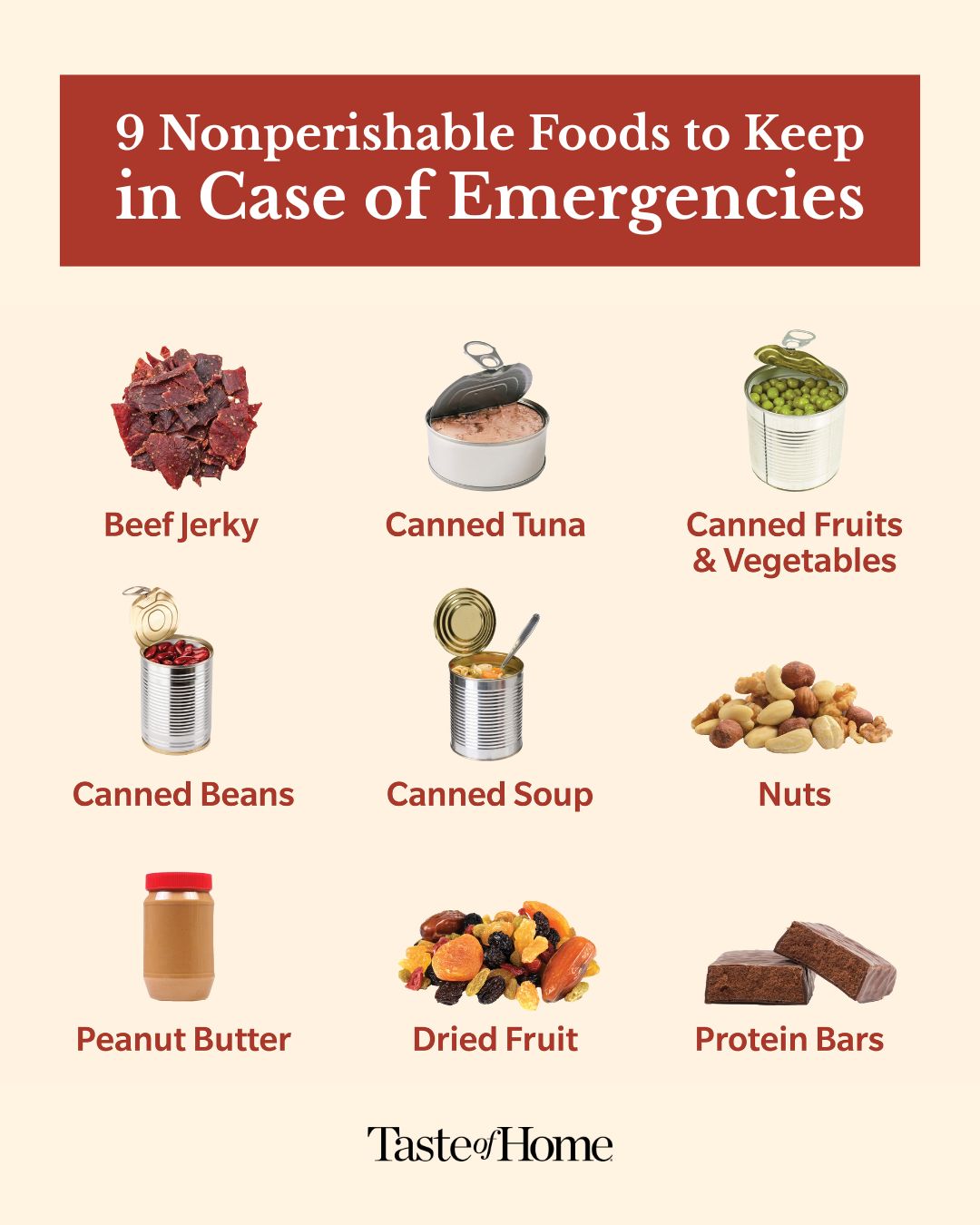
9 Nonperishable Foods to Keep in Case of Emergencies
Natural disasters, power outages, economic disruptions, and unexpected emergencies can strike with little or no warning. When they do, access to fresh food may be limited or completely unavailable for days—or even weeks. That’s why having a well-thought-out emergency food supply is not just smart planning, but an essential step toward protecting yourself and your family.
Nonperishable foods form the backbone of any emergency preparedness plan. These foods have long shelf lives, require minimal preparation, and provide essential calories and nutrients when you need them most. However, not all shelf-stable foods are equally useful in emergencies. The best options are versatile, nutrient-dense, easy to store, and familiar enough that your household will actually eat them.
Why Nonperishable Foods Matter in Emergencies
Before diving into the list, it’s important to understand why nonperishable foods are so critical during emergencies.
When disaster strikes, several things can happen at once:
-
Grocery stores may close or sell out quickly
-
Electricity and gas may be unavailable
-
Clean water may be limited
-
Supply chains may be disrupted
Nonperishable foods offer several key advantages:
-
Long shelf life: They can last months or years without refrigeration
-
Reliability: They are safe to eat even when utilities are down
-
Psychological comfort: Familiar foods can reduce stress in crisis situations
The goal isn’t just survival—it’s maintaining energy, health, and morale during difficult times.
1. Canned Proteins (Beans, Meat, Fish)
Protein is one of the most important nutrients to prioritize in an emergency, and canned proteins are among the most reliable sources available.
Why Canned Proteins Are Essential
Protein helps maintain muscle mass, supports immune function, and keeps you feeling full longer. In stressful situations, your body needs more—not less—of this critical nutrient.
Best Options to Store
-
Canned beans: Black beans, kidney beans, chickpeas, lentils
-
Canned meat: Chicken, turkey, beef, Spam
Beans provide both protein and fiber, while meats and fish supply complete proteins and essential fats.
Storage Tips
-
Store cans in a cool, dry place
-
Check for dents, rust, or swelling before use
-
Rotate stock every 1–2 years
How to Use Them
Most canned proteins are fully cooked and can be eaten straight from the can if necessary. They can also be combined with rice, pasta, or canned vegetables to create filling meals.
2. Rice and Other Shelf-Stable Grains
Rice is a staple food for a reason: it’s inexpensive, filling, versatile, and stores exceptionally well.
Why Grains Are a Survival Staple
Grains provide carbohydrates, your body’s primary energy source. In emergencies, calories matter, and grains deliver a high calorie-to-cost ratio.
Best Grains to Stock
-
White rice: Long shelf life (up to 25–30 years when properly stored)
-
Pasta: Easy to cook and comforting
-
Oats: Quick oats or rolled oats for fast meals
-
Quinoa: Higher protein content than most grains
White rice is preferred over brown rice for emergencies because brown rice contains oils that shorten its shelf life.
Storage Tips
-
Use airtight containers or Mylar bags with oxygen absorbers
-
Store away from heat and moisture
-
Label containers with purchase dates
How to Use Them
Grains can be paired with canned proteins, vegetables, or sauces. Oats can be eaten sweet or savory, making them especially versatile.
3. Canned Vegetables
While fresh vegetables may be unavailable during emergencies, canned vegetables provide essential vitamins and minerals that help prevent nutrient deficiencies.
Why Vegetables Are Important
A diet limited to starches and proteins can lead to fatigue and weakened immunity. Vegetables help balance your meals and support overall health.
Best Canned Vegetables to Keep
-
Corn
-
Green beans
-
Peas
-
Carrots
-
Tomatoes
Opt for low-sodium varieties when possible.
Storage Tips
-
Store cans in a cool, dark area
-
Avoid stacking too high to prevent damage
-
Rotate every 1–2 years
How to Use Them
Canned vegetables can be eaten cold if needed, or added to soups, rice dishes, and casseroles for improved nutrition and flavor.
4. Peanut Butter and Other Nut Butters
Peanut butter is often considered one of the most perfect emergency foods—and for good reason.
Why Nut Butters Are Ideal
They are:
-
Calorie-dense
-
High in healthy fats
-
Rich in protein
-
Shelf-stable and ready to eat
Just a few spoonfuls can provide lasting energy.
Best Options
-
Peanut butter
-
Almond butter
-
Sunflower seed butter (great for allergy-friendly kits)
Choose varieties with minimal added sugar and hydrogenated oils.
Storage Tips
-
Keep jars sealed until use
-
Store away from heat to prevent oil separation
-
Check expiration dates annually
How to Use Them
Nut butters can be eaten alone, spread on crackers, mixed into oats, or added to sauces for extra calories.
5. Canned or Shelf-Stable Fruits
Fruits are often overlooked in emergency kits, but they play an important role in nutrition and morale.
Why Fruits Matter
They provide:
-
Natural sugars for quick energy
-
Vitamins like vitamin C
-
A mental boost during stressful times
Best Fruit Options
-
Canned peaches, pears, or pineapple
-
Applesauce
-
Dried fruits (raisins, apricots, cranberries)
Choose fruits packed in juice rather than syrup when possible.
Storage Tips
-
Keep cans in a dry, cool area
-
Seal dried fruits tightly after opening
-
Rotate stock every year
How to Use Them
Fruits can be eaten as snacks, added to oatmeal, or used to balance savory meals.
6. Dry Beans and Lentils
While canned beans are convenient, dry beans and lentils offer longer shelf life and greater storage efficiency.
Why Dry Legumes Are Valuable
They are:
-
Extremely affordable
-
Nutrient-dense
-
Easy to store in bulk
-
Long-lasting (up to 10+ years)
Lentils cook faster than most beans, making them especially useful if fuel is limited.
Best Options
-
Lentils (red, green, brown)
-
Pinto beans
-
Black beans
-
Chickpeas
Storage Tips
-
Store in airtight containers
-
Protect from moisture and pests
-
Label with storage dates
How to Use Them
Beans can be cooked into soups, stews, or rice dishes. Soaking beans beforehand can reduce cooking time and fuel use.
7. Shelf-Stable Milk and Dairy Alternatives
Calcium and vitamin D are often missing from emergency diets, making shelf-stable milk products a smart addition.
Why Milk Alternatives Matter
They support:
-
Bone health
-
Muscle function
-
Overall nutrition
They’re also comforting and familiar, especially for children.
Best Options
-
Powdered milk
-
Shelf-stable boxed milk
-
Powdered plant milks (soy, almond)
Storage Tips
-
Keep sealed until needed
-
Store in a cool, dry place
-
Use opened powdered milk within recommended timeframes
- Continue reading…
