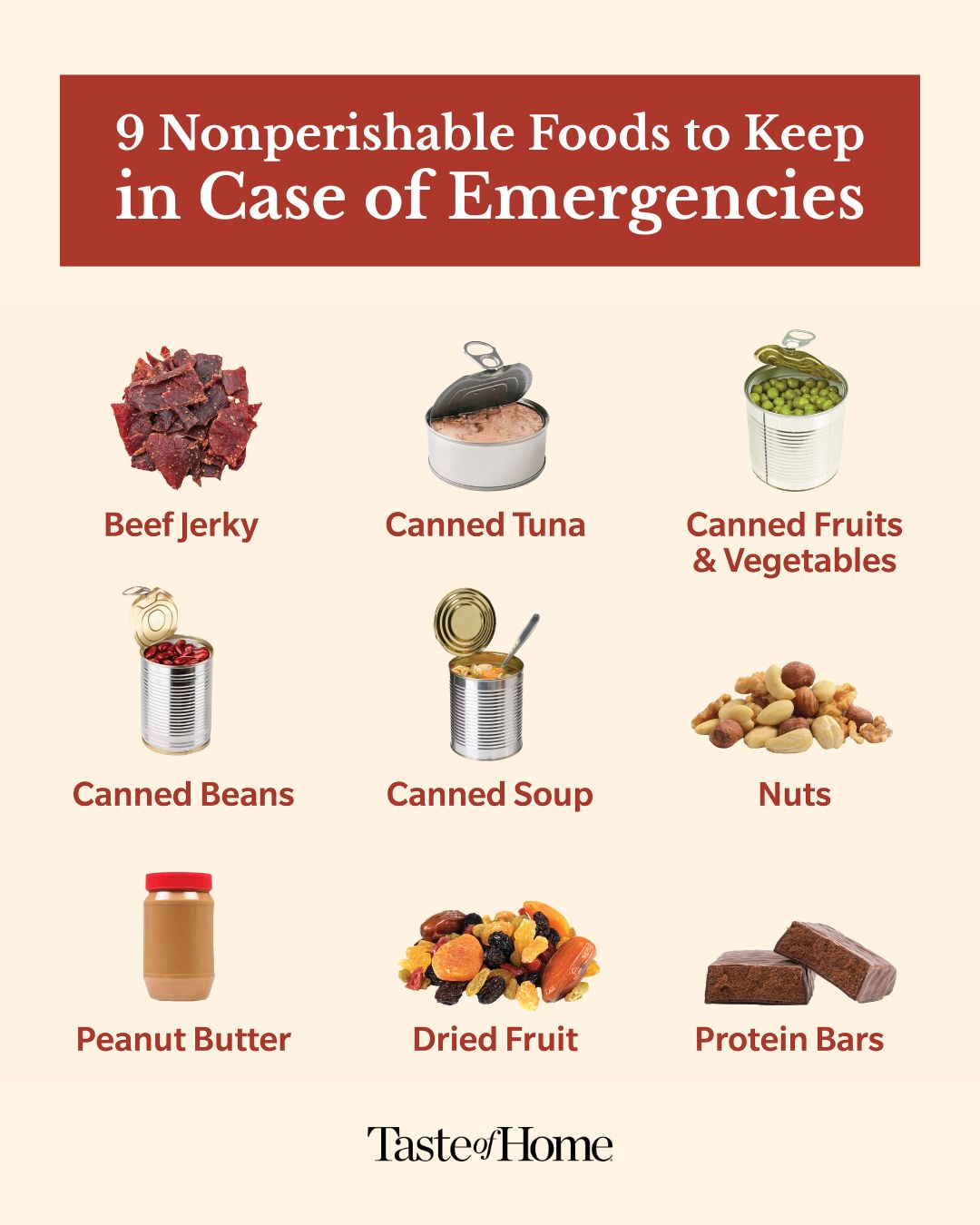
9 Nonperishable Foods to Keep in Case of Emergencies
Emergencies can strike without warning—natural disasters, power outages, or unexpected crises can leave you without access to fresh food. That’s why it’s crucial to have a stock of nonperishable foods that can sustain you and your family. Nonperishable foods are items that can last months—or even years—without refrigeration, making them an essential part of emergency preparedness. In this blog, we’ll explore nine nonperishable foods you should keep on hand, including their storage tips, nutritional benefits, and practical uses during emergencies.
Canned beans are a powerhouse of nutrition and versatility. Whether black beans, kidney beans, or chickpeas, these legumes are rich in protein, fiber, and essential vitamins and minerals.
Why They’re Ideal for Emergencies:
Long shelf life (often 2–5 years)
No refrigeration needed
Ready to eat or can be added to soups and stews
Storage Tips:
Store in a cool, dry place away from direct sunlight
Rotate cans periodically to use older ones first
Make a quick bean salad
Add to soups or chili
Mash for spreads or dips
Beans are also inexpensive and lightweight, making them easy to store in bulk. During emergencies, they provide a reliable source of protein when fresh meat may not be available.
2. Rice
Rice is one of the most versatile and long-lasting grains available. White, jasmine, or basmati rice can last 4–5 years when stored properly, while brown rice has a shorter shelf life of about 6 months due to its higher oil content.
Why They’re Ideal for Emergencies:
Provides carbohydrates for energy
Easy to cook with minimal water
Storage Tips:
Keep rice in airtight containers to prevent pests
Store in a cool, dry environment
Consider vacuum-sealed packaging for longer preservation
Practical Uses:
Serve as a side dish or main meal
Make rice-based soups or casseroles
Combine with beans for a complete protein
Rice is a staple in many cultures because it’s inexpensive, filling, and versatile, making it perfect for emergency situations.
3. Canned Vegetables
Canned vegetables such as corn, green beans, carrots, and peas provide essential vitamins and minerals when fresh produce isn’t available.
Why They’re Ideal for Emergencies:
Last 1–4 years
Retain most nutrients after canning
Easy to prepare
Storage Tips:
Store in a cool, dry place
Avoid cans with dents or leaks
Practical Uses:
Add to soups and stews
Mix with rice or pasta for quick meals
Blend into sauces or purees
Even in emergencies, it’s important to get fiber and nutrients from vegetables. Canned varieties ensure your diet remains balanced.
4. Canned or Powdered Milk
Dairy provides calcium and protein, but fresh milk spoils quickly. Canned evaporated milk, powdered milk, or UHT (ultra-high temperature) milk can last much longer.
Why They’re Ideal for Emergencies:
Shelf life of 1–5 years
Provides essential nutrients like calcium and vitamin D
Can be rehydrated or used directly in recipes
Storage Tips:
Keep in a cool, dry place
Once opened, refrigerate and use quickly
Practical Uses:
Drink as a beverage
Add to oatmeal or cereal
Use in cooking and baking
Powdered milk is especially useful for long-term storage because it requires minimal space and preparation.
5. Canned Meats and Fish
Canned meats (like chicken, turkey, or spam) and canned fish (tuna, salmon, sardines) provide a ready-to-eat protein source essential in emergencies.
Why They’re Ideal for Emergencies:
Long shelf life (2–5 years)
High in protein and healthy fats
Ready to eat
Storage Tips:
Store in a cool, dry place
Check cans for damage before storing
Practical Uses:
Eat straight from the can
Add to salads, sandwiches, or pasta dishes
Use in soups or casseroles
Canned protein ensures you maintain energy and muscle health even when fresh meat isn’t available.
6. Pasta
Pasta is inexpensive, lightweight, and has a long shelf life, making it a perfect emergency staple.
Why They’re Ideal for Emergencies:
Shelf life of 1–2 years (longer if stored in airtight containers)
Easy to cook with minimal ingredients
Can be paired with many other emergency foods
Storage Tips:
Keep in airtight containers to prevent pests
Store in a cool, dry place
Practical Uses:
Boil for a main dish
Mix with canned vegetables or meats
Use in soups or casseroles
Pasta is not just comfort food—it’s a reliable energy source when access to fresh food is limited.
7. Peanut Butter
Peanut butter is a dense source of calories, protein, and healthy fats. It’s also incredibly versatile and shelf-stable.
Why It’s Ideal for Emergencies:
Shelf life of 1–2 years
High in protein and energy
Doesn’t require refrigeration
Storage Tips:
Store in a cool, dry place
Avoid exposing to high heat to prevent oil separation
Practical Uses:
Spread on bread or crackers
Mix into oatmeal or smoothies
Use in sauces or baking
Peanut butter is compact, calorie-dense, and doesn’t spoil easily, making it perfect for situations where energy-dense food is essential.
8. Honey
Honey is a natural sweetener that never truly spoils. Archaeologists have found edible honey in ancient tombs thousands of years old!
Why It’s Ideal for Emergencies:
Indefinite shelf life
Provides energy through natural sugars
Can be used for cooking or medicinal purposes
Storage Tips:
Store in a tightly sealed container
Keep in a cool, dry place
Practical Uses:
Sweeten beverages or oatmeal
Use as a natural preservative
Apply topically for minor wounds (antibacterial properties)
Honey is a small but powerful emergency food because it’s calorie-dense, versatile, and self-preserving.
9. Dried Fruits and Nuts
Dried fruits (raisins, apricots, figs) and nuts (almonds, walnuts, peanuts) are nutrient-rich and compact foods ideal for emergencies.
Why They’re Ideal for Emergencies:
Long shelf life (6 months–2 years for dried fruits, 1 year for nuts)
High in fiber, healthy fats, and vitamins
Provide quick energy
Storage Tips:
Store in airtight containers
Keep away from heat and humidity
Continue reading…
