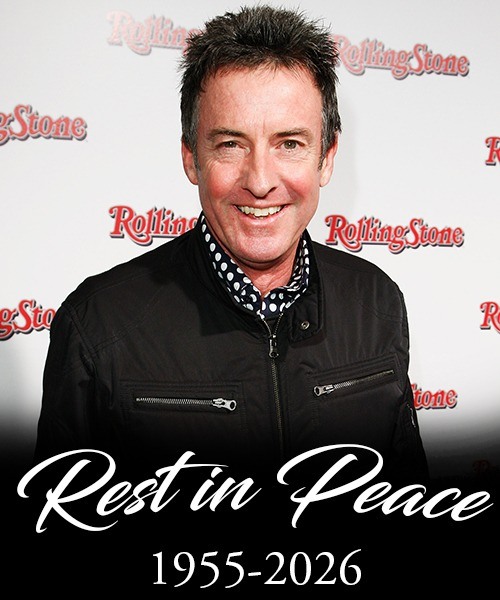
Rob Hirst: Midnight Oil’s Beating Heart — A Life in Rhythm, Courage, and Conscience
On January 20, 2026, the world lost one of rock’s most relentless, resonant, and principled figures. Rob Hirst, the drummer, songwriter, and co‑founder of the Australian rock band Midnight Oil, died at age 70 after a nearly three‑year battle with pancreatic cancer. He passed away peacefully, surrounded by loved ones, free at last from the pain and struggle that marked his final years.
Rob Hirst’s death is a pivotal moment for music — not only for Midnight Oil’s vast global audience, but for the world of rock music and its intersection with activism, culture, and conscience. His journey from a young musician in New South Wales to the beating heart of one of the most influential bands of the past half‑century is a story of talent, tenacity, and a deep belief in the power of art to speak truth to power.
Born to Beat — Early Life and Musical Beginnings
Robert Hirst was born on September 3, 1955, in New South Wales, Australia, where his life’s trajectory was shaped early by rhythm and the lure of music. Like many drummers, his first real encounter with music came through a drum kit — but for Hirst, it was more than percussion; it was his language.
By his teens, Hirst’s drumming had become ferocious, precise, and filled with personality. He wasn’t content simply to keep time; he felt it, drove it, and used it to propel stories and ideas. As a young man, his instinct for rhythm and performance distinguished him in Sydney’s vibrant music scene.
In 1972, still in his teens, he joined forces with guitarist Jim Moginie and a few school friends to form a band that would evolve over the years through several names before becoming Midnight Oil. It was a moment that would define rock in Australia and resonate around the world.
Midnight Oil: Rising from the Outback to the World Stage
From the late 1970s onward, Midnight Oil became a band unlike many others of its era. They were loud, politically charged, and unafraid to confront topics that others in rock often skirted — Indigenous rights, environmental destruction, war, and economic inequality. And at the heart of this band was Rob Hirst’s drumming — gritty, muscular, and unrelenting.
Across 13 studio albums released over more than four decades, Hirst’s beats formed the backbone of Midnight Oil’s sound. From the band’s early punk‑inflected roots to the polished, powerful rock that later defined albums like Diesel and Dust (1987), his playing was always unmistakable.
Hirst’s drumming was a study in power and nuance. On the studio recordings, his instincts for structure and mood gave Midnight Oil a kinetic identity. On stage, those same instincts manifested in performances of extraordinary energy — a relentless drive that elevated each live show into a communal catharsis.
One of his most iconic live moments was the improvised percussion solo on “Power and the Passion”, where Hirst would strike not only his drums but a steel water tank, creating one of rock history’s most visceral and unforgettable rhythmic statements.
Continue reading…
