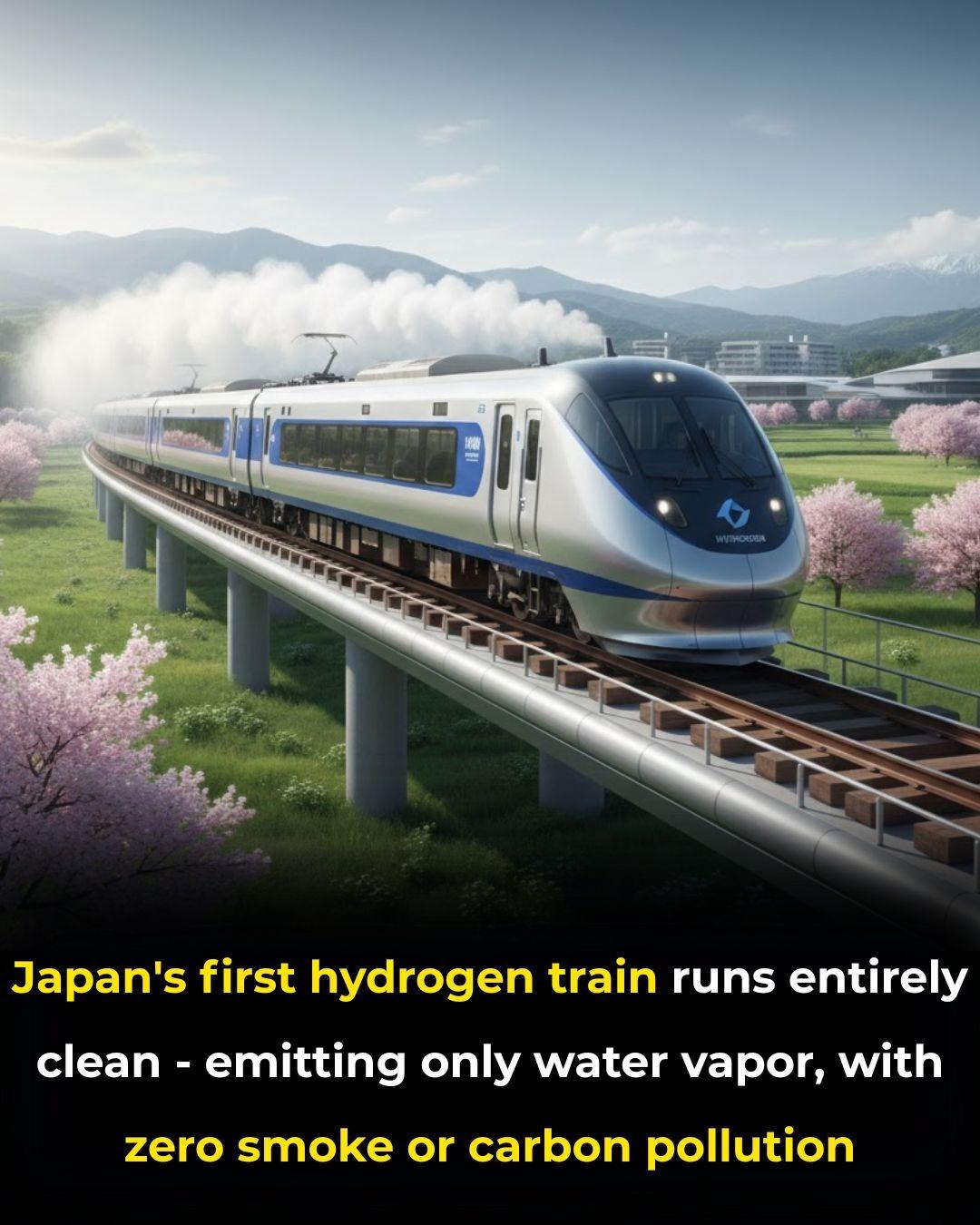
A Milestone for Clean, Sustainable Transportation
In the race to decarbonize transport and reduce carbon emissions from conventional fossil fuels, Japan has reached a pivotal moment. The nation recently unveiled its first hydrogen‑powered train — a groundbreaking leap toward sustainable mobility that could reshape the future of rail transport not just domestically, but around the world.
1. The Dawn of Hydrogen Rail in Japan: A Historic Unveiling
On February 19, Japan’s largest railway operator — East Japan Railway Company (JR East) — unveiled the country’s first hydrogen‑powered train, developed in collaboration with heavyweight industrial partners Hitachi and Toyota Motor Corporation.
Unlike traditional electric trains that draw power from overhead cables or diesel trains that burn fossil fuels, this new hydrogen‑powered train uses hydrogen fuel cells to generate electricity, emitting only water vapor and no carbon dioxide at its point of use.
The unveiling not only marks an engineering milestone, but it also signifies progress toward Japan’s ambitious 2050 carbon neutrality goal. Hydrogen fuel technology is expected to play a major role in decarbonizing sectors that are difficult to electrify, such as heavy transport and rail.
2. How Hydrogen Trains Work: Clean Energy in Motion
Hydrogen trains — often referred to as hydrail — use fuel cells to generate electricity by combining hydrogen stored onboard with oxygen from the air. This process creates an electric current to power the train’s motors while producing only water vapor as a byproduct.
Here’s a simplified breakdown of how this technology functions:
Hydrogen Storage: High‑pressure tanks store hydrogen onboard the train.
Electric Power Generation: The resulting electrochemical reaction creates electricity.
Propulsion: This electricity powers the train’s motors.
No Carbon Emissions: Only water vapor and heat are emitted.
This system makes hydrogen trains a zero‑emission alternative to diesel railways — especially important on routes where electrification infrastructure is limited or impractical.
3. The Train Behind the Innovation: HYBARI
The Japanese hydrogen train carries the name HYBARI — shorthand for Hydrogen‑Hybrid Advanced Rail Vehicle for Innovation.
HYBARI is a hydrogen fuel cell hybrid train, meaning it pairs a hydrogen fuel cell system with onboard batteries. These batteries help capture and reuse braking energy and supplement power during high demand — optimizing efficiency and extending its potential range.
Top Speed: Approximately 100 km/h.
Range: Around 140 kilometres per hydrogen refill.
Development Cost: Reportedly about ¥4 billion (roughly USD 35 million).
This train initially entered testing in 2022 and has since been running limited services on lines like the Tsurumi and Nambu lines in and around the Tokyo metropolitan area.
4. Charting the Path to Commercial Deployment
While HYBARI has already seen test operation, Japan’s plan is not just symbolic — it’s strategic.
Commercial deployment of hydrogen trains across broader regional services is targeted by 2030. This timeline aligns with Japan’s broader Green Growth Strategy and its official commitments under the Paris Agreement to cut greenhouse gas emissions and achieve net‑zero carbon by mid‑century.
JR East plans to phase in hydrogen multiple‑unit trains (like HYBARI) to eventually replace diesel trains, particularly on non‑electrified routes where installing overhead lines can be prohibitively expensive.
Part of this process also involves building supporting infrastructure — most notably, hydrogen refuelling stations capable of serving train fleets. This infrastructure will be essential for scaling operations and achieving cost efficiencies.
5. Why Hydrogen Trains Matter for Sustainability
Hydrogen fuel technology for rail offers unique advantages:
a. Zero Tailpipe Emissions
Hydrogen trains emit no carbon dioxide (CO₂) at the point of operation — water vapor is the only exhaust. This is a stark contrast to diesel locomotives, which are significant sources of greenhouse gas emissions.
b. Hydrogen as a Complement to Electrification
Not all rail lines are electrified, especially in rural areas or on lightly used routes. Hydrogen trains provide a clean alternative to diesel without the need for expensive electrification infrastructure.
c. Diversification of Energy Sources
Using hydrogen helps diversify energy sources away from fossil fuels and adds resilience to the energy system — especially in countries like Japan that rely on imported energy.
d. Quiet, Efficient Operation
Hydrogen fuel cells generate electricity quietly, meaning reduced noise pollution compared to diesel engines — a benefit for urban and suburban lines.
6. Japan’s Broader Hydrogen Strategy
Japan has not chosen hydrogen trains in isolation — they are part of a broader national strategy to expand the use of hydrogen across multiple sectors:
a. Transportation Beyond Trains
Japan is exploring hydrogen fuel cell applications in buses, trucks, and even ships. Recent examples include hydrogen‑powered passenger vessels and new hydrogen fuel cell prototypes for maritime transport.
b. Hydrogen Highways
Japan has been building a network of hydrogen refuelling stations — known as a hydrogen highway — to support fuel cell electric vehicles and other hydrogen applications.
c. National Policy Support
Government initiatives like the Basic Hydrogen Strategy and legislative frameworks such as the Hydrogen Society Promotion Act aim to foster hydrogen production, infrastructure, and market demand.
Continue reading…
